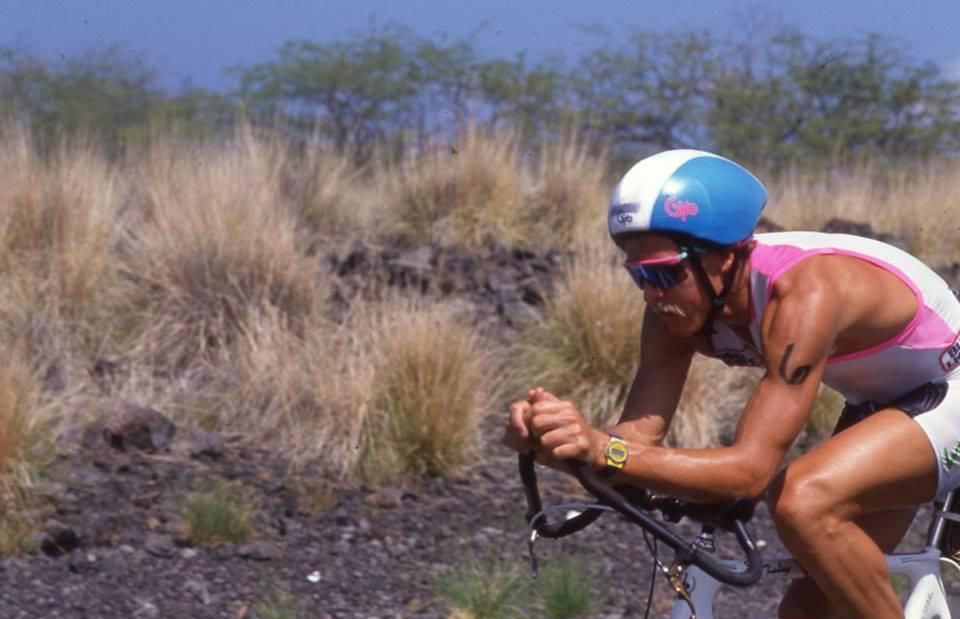
Scott Tinley
The Renaissance Man of Ironman
The Renaissance Man of Ironman: Scott Tinley's Race Beyond the Finish Line#
Introduction: The Philosopher in the Lifeguard Tower#
The Southern California sun glints off the Pacific, a familiar, steady rhythm for the man in the Del Mar lifeguard tower. From this vantage point, the world unfolds in patterns of tide and time. He is a guardian, a watcher, a role he has played since his youth. But this is no simple "beach bum." The man scanning the horizon is Dr. Scott Tinley, a university lecturer with a Ph.D. in Cultural Studies, an author of multiple books on the sociology and philosophy of sport, and a respected academic at San Diego State University (SDSU) and California State University San Marcos (CSUSM). This juxtaposition—the elemental, physical world of the lifeguard and the abstract, intellectual world of the professor—is the essential paradox of Scott Tinley.
To understand him, one must look beyond the two Ironman World Championship titles that defined him for a generation. His story is not merely one of athletic dominance, but of a life lived as a continuous endurance event—a relentless quest for meaning that began in the sun-scorched lava fields of Kona and continues today in the quiet halls of academia and the solitude of the lifeguard tower. Tinley's journey is not just about winning races, but about fundamentally understanding
why we race at all, and more profoundly, what happens when the race is over.
Part I: Forging Iron in the California Sun#
A Californian Genesis#
Scott Tinley’s story is inextricably linked to the landscape of his birth. As a seventh-generation Californian, his identity was shaped by the state's unique culture of sun, surf, and boundless possibility. His own narrative traces a quintessential Golden State arc, growing from a "beach rat to lifeguard to a recreational administration major". This idyllic lifestyle, steeped in the physical challenges of the ocean, provided the raw athletic material that would later be forged into an Ironman champion.
The Accidental Pioneer#
His entry into the nascent world of multisport was organic, an extension of his lifestyle rather than a calculated career move. In 1976, while studying Leisure Management at San Diego State University and working as a sailing instructor, Tinley began competing in triathlons. At the time, the sport was a fringe activity, a quirky challenge for a handful of hardy souls, not the global, corporate-branded industry it is today. He was drawn to its unmediated, grassroots ideology—a spirit of individual challenge against the elements that he continues to champion.
The Rise of a Contender#
It didn't take long for his natural talent to surface. He was not just a participant but a formidable competitor. His early progress in the burgeoning sport culminated in his first major performance on the world stage at the 1981 Ironman World Championship in Hawaii, where he secured a third-place finish. This result was a declaration of intent; a new force had arrived in Kona, ready to challenge for the crown.
Part II: The Big Four and the Battle for Kona#
A Dynasty of Rivals#
The 1980s in triathlon were defined by an unparalleled dynasty of four men who dominated the sport for nearly fifteen years: Mark Allen, Scott Molina, Dave Scott, and Scott Tinley. Known collectively as the "Big Four," they raced each other "tooth and nail," sharing 15 Ironman World Championship titles between them and elevating the sport to international prominence through their epic battles, many captured by ABC's Wide World of Sports.
Their dynamic was complex. They were fierce rivals who also forged deep bonds while training and traveling the world together. Mark Allen later described their distinct competitive personas: Molina, nicknamed "Skid" or "The Terminator," was the relentless workhorse; Tinley ("ST") was the innovator, always seeking a technological edge; Dave Scott ("The Man") was the singularly focused specialist who would enter a "bootcamp mode" to crush the field in Kona; and Allen himself ("Grip") was known for his unyielding mental fortitude. While Tinley, Allen, and Molina often trained together in the San Diego "mecca," Dave Scott cultivated an image of a reclusive icon, training in relative isolation in Davis, California—a mystique he later admitted was partly a mental strategy.
The First Crown: The 1982 Campaign#
The year 1982 marked Tinley's ascension to the pinnacle of the sport. In a unique historical quirk, the Ironman World Championship was held twice that year as it transitioned from a February to an October race date.
His victory in the February race was a monumental performance, still ranked among the top five male Kona performances of all time. Having finished third the previous year, Tinley returned with a vengeance. He was utterly dominant, recording the fastest bike and run splits of the day to set a new course record of 9:19:41. He beat the formidable Dave Scott, who finished second, by a staggering 17 minutes. While Scott later noted that a knee injury had hampered his preparation, Tinley's commanding win was undeniable.
When the championship returned just eight months later in October, the narrative shifted. Dave Scott, "pissed about the race in February," was determined to reassert his dominance and did so, reclaiming the title. Yet, the day belonged as much to the Tinley family. Scott finished a strong second, but the major story was his younger brother, Jeff, crossing the line in third. It was an extraordinary "one-three finish for the Tinley family," a moment that forever cemented their name in Ironman lore.
Agony, Ecstasy, and a Football#
The years that followed were a showcase of Tinley's grit and unique character, marked by both agonizing defeat and audacious victory. In 1983, he and Dave Scott engaged in one of the most epic duels in the race's history. They battled side-by-side for over nine hours through the punishing Hawaiian heat, with Scott ultimately prevailing by a mere 33 seconds. The loss was a profound lesson in perseverance, teaching Tinley to "Never, ever give up".
His second and final Ironman victory in 1985 was a performance that perfectly encapsulated his pivotal role in the sport's history. The race was held under a cloud of controversy. It was the last year of amateurism at Kona, and in protest of the lack of prize money, most of the top professionals, including Dave Scott and Mark Allen, staged a boycott. Tinley, the only member of the Big Four to compete, arrived on the Big Island just two weeks after a grueling long-distance race in Nice, France. What followed was pure theater. So comfortable was his lead during the marathon that he was famously captured on camera casually tossing a mini-football with a journalist riding alongside him on a scooter. The playful moment drew a stern rebuke from the lead media van. The commentator scolding him was none other than his rival, Dave Scott, working for the TV broadcast. Scott challenged him to set a new world record to legitimize the victory and prevent it from being seen as a "cherry-pick". Tinley responded, putting his head down and running his way into the history books with a new course record of 8:50:54.
This victory was far more than a personal triumph; it was an act that inadvertently forced the sport into its professional era. The pro boycott was designed to diminish the event's prestige, but by showing up and shattering the course record, Tinley created an undeniable spectacle. He simultaneously validated the race as a legitimate world championship while starkly highlighting the absurdity of its amateur status. His performance left the organizers with little choice. The following year, in 1986, a $100,000 prize purse was introduced, forever changing the face of the sport. Scott Tinley, the laid-back Californian, had become the accidental reformer.
Table 1: Scott Tinley's Ironman World Championship (Kona) Results (1981-1990)#
| Year | Finish Place | Overall Time |
|---|---|---|
| 1981 | 3 | 10:12:47 |
| 1982 (Feb) | 1 | 9:19:41 |
| 1982 (Oct) | 2 | 9:28:28 |
| 1983 | 2 | 9:06:30 |
| 1984 | 2 | 9:18:45 |
| 1985 | 1 | 8:50:54 |
| 1986 | 3 | 9:00:37 |
| 1988 | 4 | 8:43:11 |
| 1990 | 6 | 8:47:48 |
Data sourced from race results archives. Note: Tinley did not finish in 1987 and did not compete in 1989.
Part III: Racing the Sunset#
The Beginning of the End#
After more than two decades at the top of the sport, Tinley professionally retired in 1999 The transition was not a graceful exit but a confrontation with the inevitable decline of a high-performance athlete. As he described it, a time came when "age took hold of his legs, and no amount of training would help". His "athletic gold rush went bust," and the physical erosion precipitated a profound psychological crisis.
The Void#
The years immediately following his retirement were the most challenging endurance event of his life. He candidly wrote and spoke about battling "dark feelings of despair" and deep depression. The singular identity of "Scott Tinley, Athlete," which had defined his existence for twenty years, dissolved, leaving a terrifying void. He described a period of self-imposed isolation where he felt "paralyzed," and the only thing he could bring himself to do was "reach for a book and read a passage". In that simple act, a flicker of his future path emerged.
A Conscious Uncoupling from Sport#
Unlike many of his peers who remained tethered to the sport through coaching or commentary, Tinley made a deliberate choice to "run the furthest and the farthest from Triathlon". As Mark Allen observed, Tinley was the only one of the Big Four who "really exited the sport". Tinley explained this was a conscious decision, born from the feeling that he had "gone as far as I could in the physical world" and needed to explore other creative and intellectual facets of his "total psyche" without the sport's powerful occupational gravity.
This difficult transition became the crucible for his next life's work. For two decades, his body had been a finely tuned instrument of performance and the primary source of his identity. When that instrument began to fail—when the "factory parts have worn out," as he poetically described the need for hip surgery—the resulting physical and emotional trauma became the raw data for his academic inquiry. He masterfully shifted his perspective from being the subject of the experience to becoming the objective analyst of it. His seminal book,
Racing the Sunset, is the ultimate product of this transformation: a deeply personal, confessional, and scholarly examination of athlete retirement. He turned his own pain and the shared stories of hundreds of other athletes into a powerful academic study, making his life his own laboratory and lending his subsequent work an unparalleled authenticity.
Part IV: The Professor of Sweat#
The Longest Course: A Return to the Classroom#
Tinley's second act is arguably more impressive than his first. He embarked on an academic journey that was its own form of ultra-endurance event, one requiring immense "patience and perseverance". He returned to his alma mater, SDSU, earning a Master of Arts in Social Psychology of Sport in 2003 and a Master of Fine Arts in Fiction Writing in 2004. He capped this intellectual marathon by achieving a Ph.D. in Cultural Studies from Claremont Graduate University in 2012.
From Composition to Culture#
His path into the academy was not linear. He initially found himself teaching lower-division composition courses, a soul-crushing task that he felt was killing his love for the written word. A fortuitous conversation with an SDSU dean about a new MBA program in Sport Management provided a lifeline. Tinley suggested the curriculum needed a "soft science," a course on the sociology or philosophy of sport. The dean's response was simple: "Fine, you teach it". This was a "magical" turning point. It gave him a platform to "match the theoretical with the phenomenological, the books with the street," blending his scholarly knowledge with his decades of lived experience at the highest level of sport.
The Athlete-Scholar#
This synthesis became his unique contribution to academia. His research interests—athlete retirement and transition, the sociology of commercial sport, mythology and athlete heroes, and the history of beach culture—are all subjects he has not merely studied but inhabited. He formalized this work by founding the Institute for Athletes in Retirement and Transition (IART) at SDSU, creating an institutional home for the questions that had defined his own life's journey.
His complete immersion in this new world offers the clearest evidence that his competitive identity was a chapter, not the entire book. While many retired athletes remain in the sport's orbit, Tinley pursued a path demanding a completely different skill set. His dedication to earning a doctorate and becoming a full-time lecturer reveals a deep-seated intellectual curiosity that was always present but was long overshadowed by his physical prowess. As he wryly noted in a recent interview, he has now been in academia as long as he was a professional athlete, yet people recognize him for his racing, not his classes. This disparity highlights how a public identity can remain frozen in time, even as one's personal identity has undergone a total reinvention. The "competitor" was just one role for a man who, at his core, has always been a seeker of knowledge and experience.
Conclusion: The Endless Course#
The story of Scott Tinley comes full circle, back to the man in the lifeguard tower. That image, once a simple starting point, is now imbued with the full weight of his journey. The tower is a perfect metaphor for his life: a place of physical vigilance and quiet contemplation, a tangible link to his Californian roots, and a serene vantage point from which to observe the world he has spent a lifetime trying to understand.
His legacy is twofold. He will forever be remembered as a pioneering champion, one of the legendary "Big Four" who forged a global sport from the volcanic rock of Hawaii through sheer will and talent. But his second, more enduring legacy may be that of the thoughtful intellectual who used his own life as a text to illuminate the universal human challenges of identity, transition, and reinvention. For Scott Tinley, the race never truly ended; it simply evolved. The finish lines in Kona were merely transition points on a much longer, more complex course—a lifelong pursuit of understanding not just how to go faster, but how to live a meaningful life. His greatest victory may not be the trophies on his mantel, but the wisdom he has gained and shared from having raced, and finally understood, the sunset.