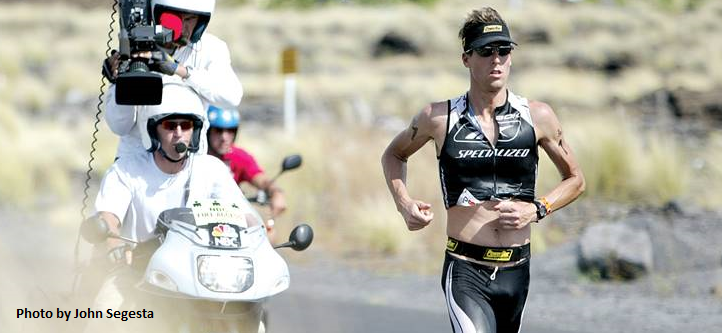
Peter Reid
The Rise, Fall and Rebirth.
The Iron Enigma: The Rise, Fall, and Rebirth of Peter Reid#
Introduction: The Ghost of the Lava Fields#
The De Havilland Beaver float plane banks against a backdrop of old-growth forest, its single propeller biting into the damp British Columbia air. Below, the rugged coastline of Vancouver Island unfolds, a maze of inlets and sounds the colour of slate. At the controls, the pilot is a study in focused calm. He is rawboned and well-mannered, his senses attuned to the subtle language of the wilderness—the direction of the wind read from the rustle of treetops, the texture of ripples on the water’s surface. His passengers, a mix of loggers heading to a ten-day shift and backpackers seeking the trailhead, see only a skilled professional navigating the notoriously fickle coastal weather. They have no way of knowing that the man flying them to isolated lodges and remote villages is a ghost from another world, a three-time Ironman World Champion who once reigned over the scorched lava fields of Hawaii.
This is Peter Reid, one of the most dominant, celebrated, and yet profoundly enigmatic figures in the history of triathlon. His name is etched alongside the sport’s immortals, his career a monument to impossibly hard work and monastic dedication. Yet, the story of his reign is eclipsed by the manner of its end. In 2007, at the height of his popularity, Reid was scheduled to be a guest of honour at the Ironman World Championship in Kailua-Kona, the very stage of his greatest triumphs. His sponsors awaited him. His fans anticipated his presence. But Peter Reid never boarded the plane. Instead, he vanished from the sport, severing all contact and retreating into a self-imposed exile that baffled the community he once ruled.
To understand Peter Reid is to explore the anatomy of a champion forged not from effortless talent, but from sheer, indomitable will. His is a story that transcends athletic achievement, delving into the complex machinery of human motivation, the immense psychological cost of greatness, and the quiet courage required for reinvention. From his unlikely beginnings as a non-swimmer in Quebec to his three world titles, his career was propelled by a relentless, all-consuming need to prove his doubters wrong. It was a fire that powered him to the pinnacle of his sport but also burned him to the ground, paving the way for a remarkable rebirth and a new, quieter life in the sky. This is the story of the man who conquered the world's toughest race, only to walk away and discover that true victory lay in charting a completely new flight path.
Part I: Forging the Engine (1969-1997)#
Unlikely Beginnings#
Peter Reid’s journey to the top of the triathlon world began not in a swimming pool, but on the icy slopes of Quebec. Born in Montreal on May 27, 1969, his first athletic passion was elite downhill ski racing, where he trained among the fearless alpine chargers known as the "Crazy Canucks". To maintain his aerobic fitness during the summer months, he took up bike racing and discovered a natural talent for the discipline. For a time, it seemed his future lay on two wheels, but he ultimately set aside professional ambitions to focus on his university studies.
It was at Bishop’s University that a friend persuaded him to try a triathlon, and in 1989, Reid made his multisport debut. The experience was nothing short of humbling. The powerful cyclist and skier was a liability in the water. Described as an amateur who could barely swim the length of a 25-meter pool, he struggled profoundly. During training sessions, he was routinely "smoked" by 12-year-olds, and in his first-ever race, he was forced to resort to breaststroke just 100 meters into the swim. For many, such an inauspicious start would have been the end. For Reid, it was the beginning. The temptation to quit was palpable, but the humiliation of his weakness lit a fire within him. He was hooked, not just by the sense of accomplishment, but by an urgent need to improve.
The Psychological Engine: The Father, The Doubters#
To comprehend the ferocious drive that would come to define Peter Reid, one must understand the psychological engine that powered him. It was an engine fueled by skepticism, a mechanism that converted external doubt into internal resolve. The primary architect of this motivation was his own father. When Reid, fresh out of university, declared his intention to become a professional triathlete, his father scoffed at the notion, dismissing it as not being a "real career". That single comment became the foundational motivation for Reid’s entire professional life. It transformed his athletic pursuits into a mission: to prove his father, and by extension all his doubters, profoundly wrong.
This "prove them wrong" mentality became the central, unifying theme of his journey. It was a pattern that would repeat itself at every critical juncture. It explains the almost masochistic intensity of his training, his obsessive focus on every minute detail, and his chronic dissatisfaction with anything less than absolute dominance. Years later, after his racing career was over, it was another cynical comment from a stranger that would reignite this same cold-blooded motivation and propel him into his second act as a pilot. His life story is a powerful illustration of how external validation, or the lack thereof, can be weaponized into a relentless force for achievement.
The Deliberate Ascent#
After completing his studies, Reid gave himself a one-year ultimatum to make a living as a professional triathlete. He persevered through his initial struggles, and by 1993, he had his first notable victory at the Astroman race in Japan—a brutal event that a typhoon had transformed into an 8.5 km run, 180 km bike, and 42 km run duathlon. A significant turning point came in 1994 when he began working with coach Roch Frey, who helped bring structure and direction to his raw determination.
However, the most pivotal decision of his early career was his move from Quebec to Victoria, British Columbia, in the mid-1990s. While the initial motivation was the region’s mild climate, which allowed for year-round training, Victoria offered something far more valuable. The city was a "melting pot" of Canada’s best international athletes. In local coffee shops, Reid found himself trading ideas and comparing notes with world champion cyclists like Alison Sydor and Roland Green, and Olympic rowers such as Derek Porter and Silken Laumann. Reid would later describe this environment as a "training university," an intellectual milieu where he absorbed knowledge on everything from nutrition and weight training to the psychology of high performance. This collaborative atmosphere pushed him from being an average Canadian athlete to a competitor on the world stage.
First Taste of Success#
The move to Victoria paid immediate dividends. In 1995, a third-place finish at a major race in Nice, France, behind the legendary Simon Lessing, provided the springboard of confidence he needed. The following year, he secured his first major victory on North American soil at the prestigious Wildflower triathlon in California.
But it was the long-distance races that truly called to him. In 1996, he tackled the formidable Ironman World Championship in Kona for the first time, turning heads with an impressive fifth-place finish. He returned in 1997 and improved to fourth, the same year he won the first of what would be three consecutive Ironman Australia titles. In just a few years, the man who once struggled to swim a single lap had established himself as a legitimate threat to the throne. The world of triathlon was on notice. The assault on the Big Island had begun.
Part II: The Reign on the Big Island (1998-2005)#
For eight years, from 1998 to 2005, Peter Reid was a force of nature in Kona. In an era of fierce competition, he achieved a level of consistency that remains a benchmark in the sport, failing to make the podium only once in that span. This period saw him capture three world titles, each a dramatic chapter in his evolving story of ambition, suffering, and redemption.
1998 – The Breakthrough Victory#
Reid arrived in Kona for the 1998 Ironman World Championship at a low ebb. He had been struggling with health issues and privately believed it might be his last attempt at the title. His spirits were lifted, however, after a chance meeting with his idol, six-time champion Mark Allen, whose training articles had become a source of inspiration. That year also marked the beginning of a crucial training partnership with a young American pro named Tim DeBoom. The pair spent the summer training at high altitude in Boulder, Colorado, where Reid relentlessly questioned eight-time champion Paula Newby-Fraser for insights, famously being limited to "one question a day" due to the sheer volume of his inquiries.
On race day, October 3, the island presented tough weather conditions for the 20th anniversary of the event. Reid executed a masterful race. He emerged from the 3.9 km swim in 52:04, hammered the 180 km bike course in 4:42:23, and laid down a blistering 2:47:31 marathon. He crossed the finish line in 8:24:20, decisively defeating the pre-race favorite and defending champion, Luc Van Lierde of Belgium.
The victory, however, was defined by a moment that perfectly encapsulated his psyche. Despite building a commanding eight-minute lead on the marathon, Reid was consumed by a paranoid fear of being caught. In the final two miles down Ali'i Drive, he looked over his shoulder a reported 42 times, absolutely certain that an unseen rival was about to surge past him. The 'someone' never materialized. He crossed the line a world champion, but the image of his anxious glances revealed a mind driven as much by fear of failure as by the desire for success. His celebration was characteristically muted; that night, he ate a burger quietly at a local McDonald's. The win catapulted him to stardom, earning him his first of four
Triathlete Magazine Triathlete of the Year awards and the title of Canada's Male Athlete of the Year.
2000 – The Duel and the Beginning of the End#
By 2000, Reid was the established king of Kona. He and his then-wife, fellow professional Lori Bowden, were the sport's undisputed power couple, having made history as the first husband-and-wife team to win the same Ironman events in Australia and Canada. His chief rival on the Big Island was now his close friend and former training partner, Tim DeBoom, a hungry and talented American determined to claim the crown.
The 2000 race became an epic duel. Reid and DeBoom battled all day across the lava fields. Reid’s splits were phenomenal: a 51:45 swim, a 4:39:32 bike, and a race-best 2:48:10 run. It was on the run where the race was won. Reid had to dig deeper than ever before to withstand a ferocious late charge from DeBoom, ultimately winning his second world title in 8:21:00, by a razor-thin margin of just 2 minutes and 9 seconds.
Afterward, Reid described it as the "toughest race I have ever done". "Those last four miles, I had to dig so deep. I haven't dug that deep ever," he said. "It's always been my dream to cross the finish line and almost pass out, and that almost happened today". He was so exhausted he barely registered the final triumphant stretch down Ali'i Drive; all he wanted was to see the white finish line. Where his 1998 victory felt "magical," this one was pure, unadulterated torture. And in his obsessive mind, the narrow victory was not a triumph to be savoured, but a sign of vulnerability. The two-minute margin was, in his words, "too small". This dissatisfaction planted a dangerous seed. As he stood atop the podium, Reid was already planning his assault for the next year, unknowingly marking what he would later call "the beginning of the end".
2001-2002 – The Burnout and the Phoenix Act#
The obsessive drive that had carried Peter Reid to two world championships now became his undoing. Haunted by the slim margin of his 2000 victory, he resolved to become untouchable. He afforded himself no celebration and no break, instead launching immediately into a punishing training regimen of severe 30-hour weeks, determined to dominate the sport completely. The all-consuming, unbalanced life that was a prerequisite for his success now became the catalyst for his failure.
The result was catastrophic burnout. He became mentally exhausted and his body broke down. His white blood cell count and hematocrit levels plummeted, leaving him with no energy. Doctors suspected a virus and subjected him to weeks of medical tests. By the time the 2001 Ironman World Championship arrived, he was a shadow of his former self. He dropped out during the marathon, watching as his friend Tim DeBoom finally captured the title that had eluded him.
By the summer of 2002, Reid had effectively retired. He had removed himself from the sport and all things related to it. He was spotted in Victoria coffee shops wearing motorcycle leathers, his athletic frame gone soft. Bob Babbitt of
Competitor Magazine commented that his "belly was bigger than it has ever been". He traded his Specialized racing bike for a motorcycle, finding solace riding his old training routes. A friend, tired of watching him spiral, finally confronted him. He handed Reid a copy of an article by Mark Allen titled, "18 Weeks To Your First Ironman," a training program for beginners, and issued a challenge: "Go back to Hawaii to finish the damn thing. Then quit the sport with some closure".
The challenge struck a chord. Over the next 15 weeks, Reid embarked on a quiet, improbable comeback. He lost 25 pounds, but his training was remarkably light, consisting of mostly slow, steady work with only five hard, intense workouts. He arrived in Kona in 2002 with no expectations, simply a desire to finish with dignity. He did more than that. In one of the most astonishing turnarounds in the sport's history, he finished in second place behind DeBoom, smiling all the way to the finish line. It was, he would say, the "second biggest highlight of my career," a testament to his resilience and a rediscovery of his love for the sport.
2003 – The Redemption#
The comeback of 2002 set the stage for the redemption of 2003. Reid arrived in Kona a renewed man, his motivation shifted from a need to dominate to a sense of gratitude. He had spent the months prior incorporating new swimming tools into his training, and on race day, it paid off. He exited the water after a 50:36 swim, declaring, "I had the best swim of my life". This put him in an unusually strong position, near the front of the race from the outset, surprising his competitors.
On the run, he was relentless. He took the lead just before the 16 km mark, passing Germany's Normann Stadler. The defending champion, Tim DeBoom, was also in his sights. In a dramatic turn of events, DeBoom, who was suffering from a kidney stone, was forced to drop out of the race around mile 13, collapsing in an ambulance. Reid ran on, crossing the finish line in 8:22:35 to claim his third and final Ironman World Championship. This victory was different. The first had been magical, the second torturous. This third crown was a tribute. It felt good to win, he said, but it felt better "to honor those close to him who were rock-solid and never wavered".
Coda to a Dynasty (2004-2005)#
Reid’s reign in Kona did not end with his final victory. He returned to the Big Island two more times, securing second-place finishes in both 2004 and 2005. His 2004 performance was particularly remarkable. Coming off the bike in 11th place, 24 minutes behind the leader, he unleashed the day's fastest marathon, a blistering 2:46:10, to run his way back to a silver medal. These final podiums cemented a legacy of astonishing consistency and longevity at the highest level of the sport.
| Year | Finish | Time |
|---|---|---|
| 1996 | 5th | 8:24:37 |
| 1997 | 4th | 8:43:16 |
| 1998 | 1st | 8:24:20 |
| 1999 | 2nd | 8:22:54 |
| 2000 | 1st | 8:21:01 |
| 2001 | DNF | - |
| 2002 | 2nd | 8:33:06 |
| 2003 | 1st | 8:22:35 |
| 2004 | 2nd | 8:43:40 |
| 2005 | 2nd | 8:20:04 |
Part III: The Anatomy of a Champion#
Peter Reid's success was not born of innate physical gifts; it was meticulously constructed through a combination of extreme work ethic, obsessive discipline, and sophisticated mental preparation. He was the ultimate proof that, in the grueling world of Ironman, dedication could indeed trump talent.
The Reid Doctrine: "Dedication Can Trump Talent"#
At the core of Reid’s philosophy was a belief in the transcendent power of hard work. He was a high-volume athlete, routinely logging 5 to 10 hours of training per day, six days a week, in the lead-up to Kona. This relentless approach was perfectly summarized by his contemporary, Olympic gold medalist Simon Whitfield: "His was the epitome of work ethic for our sport. He simply got the work done… in rain, shine, hail and snow. He was early mornings and early to bed". Reid’s life as a professional was profoundly unbalanced, with every decision and action calibrated for a single purpose: peak performance on race day.
The most vivid illustration of this was his infamous "psycho weekends." For six consecutive weeks, from nine weeks out from Kona, he would subject his body to an overwhelming training load. A typical Saturday would include a one-hour swim, a seven-hour bike ride, a one-hour brick run, and a late-afternoon gym session. Sunday would begin with a long run of over 20 miles, followed by a midday recovery ride and a second run in the afternoon. This regimen was designed not only to build immense physical endurance but also to forge the mental fortitude required to suffer for over eight hours on race day.
The Weight of Victory: Diet and Discipline#
Reid understood with absolute clarity the critical relationship between his body weight and his marathon performance. This understanding led to a dietary discipline that bordered on the obsessive. Starting eight weeks out from a key race, he would implement a draconian nutritional plan. To eliminate the possibility of temptation, he kept no food in his house, opting instead to go to the grocery store each day to purchase only enough food for that day's meals.
His approach was one of calculated suffering. He would often go to bed hungry, with headaches from the caloric deficit, all in the service of reaching his optimal race weight. He knew the numbers with chilling precision: if he raced under 165 pounds, he was capable of a sub-2:48 marathon in Kona; if he was over 170 pounds, he knew he couldn't break 2:50.26 This obsessive control over his diet was not an eating disorder in the clinical sense, but rather a professional tool, a non-negotiable component of his job. For Reid, being super light was a key to success, a sacrifice he was willing to make to find the extra minutes he needed on the run.
The Fortress of Solitude: Mental Preparation#
Reid’s approach to mental preparation was a fascinating paradox. While he leveraged the collaborative, communal environment of Victoria's athletic scene to build his physical engine and broaden his knowledge base, his final race preparations were an exercise in profound solitude. He understood that while community could build the body, only solitude could truly sharpen the mind for the unique pressures of Kona.
In the final weeks before the World Championship, he would sequester himself in a "secret training camp," a solitary outpost at 6,000 feet on the side of Mauna Kea. With no friends, no television, and no phone calls, he would reduce his existence to the most basic elements of the sport: physical exertion and mental awareness. During this period of "solitary confinement," he would systematically address any doubts or fears that could lead to a mental collapse during the race. It was here that he prepared himself to enter what he called "a world of pain". This deliberate, two-pronged strategy—using community for development and solitude for refinement—was a sophisticated psychological system for creating a champion. To further hone his mental edge, he also explored unconventional methods, engaging in Huichol Shamanistic sessions in California, a practice famously used by his mentor, Mark Allen.
Part IV: Grounded: A Life After the Finish Line (2006-Present)#
The Vanishing Act#
Peter Reid officially announced his retirement from professional triathlon in June 2006. For the next 17 months, he remained a visible and popular figure in the sport, making appearances for sponsors, dabbling in coaching, and quietly taking flying lessons on the side. His transition appeared to be a graceful exit for a celebrated legend.
The shock came in the fall of 2007. As a guest of honor for the Ironman World Championship, his flight and accommodations were booked. But Reid never showed up in Kona. He refused to board his plane, cut off all contact with his sponsors and the broader triathlon world, and simply vanished. The abruptness of his disappearance left a void, turning one of the sport's most popular figures into its greatest enigma.
Months later, the story behind his sudden retreat emerged. The catalyst was a single, cutting remark. During a sponsor appearance at a bike shop in New York City, an audience member cynically questioned his new life, suggesting he was merely "coasting along in life by banking on his name". The insult struck a deep nerve. It reignited the same "cold-blooded motivation" that had been sparked by his father's skepticism years earlier. That single comment provided the impetus for his next great challenge. He decided then and there to pursue his childhood dream of becoming a professional pilot.
A Second Act in the Sky#
Flying had been a dream of Reid’s since he was a boy, taking fishing trips with his father to isolated lodges in bush planes. Now, with his athletic career behind him, he channeled the entirety of his formidable focus into this new pursuit. His reinvention was not just a career change; it was a complete personal and professional reconstruction, undertaken with the same single-minded intensity that had defined his triathlon career.
He explicitly stated, "I approached the goal [of becoming a pilot] like I was training for the Ironman". He moved up his commercial pilot's exam and landed his first job in just six months, an extraordinary feat given his limited flight hours. His new colleagues at Air Nootka in Gold River, BC, quickly noticed his unique drive. His habit of getting a head start on any task, from hosing saltwater off a plane to preparing for a flight, became a running joke. "Uh oh," someone would say, "Peter's got that look". His skills developed at an astonishing rate. A co-owner of the company remarked that his abilities were "exceptional" for a new pilot, noting that while most young pilots are reactive, Reid was "already ahead of the plane when he’s flying". This pattern mirrored his entire life: the transformation from skier to triathlete, from weak swimmer to world champion, from burnout to comeback. His core trait was not just toughness, but an immense capacity for focused reconstruction.
Today, Reid has accumulated more than 4,000 hours of flight time, much of it in difficult conditions that require exceptional skill. More importantly, he has found a profound sense of balance that eluded him throughout his athletic career. Now living in Victoria with his partner, Malaika Ulmi, and their son, Waymouth, he has a life structured around family and work, with running and biking now enjoyed as hobbies rather than obligations. "It's been a long long time searching for little balance in my life," he said. "I work four days on with three days off. I walk to work, spend time with my family and get to do some running and biking. It's a balance I never had in triathlon".
A New Relationship with the Past#
After years of complete separation from the sport that had defined him, Reid has slowly re-engaged with triathlon, but on his own terms. He has been seen volunteering at aid stations at Ironman Canada, finding genuine joy in cheering on the athletes. This new, healthier relationship allows him to love the sport without being consumed by it, to appreciate the community without feeling the crushing weight of competition. He has found a way to honour his past while fully inhabiting his present.
Conclusion: The Legacy of the Reluctant Legend#
Peter Reid’s place in the pantheon of endurance sports is secure. His staggering list of accomplishments includes ten Ironman victories, three Ironman World Championship titles, and inductions into the Ironman Hall of Fame, Canada's Sports Hall of Fame, the BC Sports Hall of Fame, and the Greater Victoria Sports Hall of Fame. He is, without question, one of the all-time greats, a name that belongs in the same breath as legends like Dave Scott and Mark Allen.
Yet his most enduring legacy may be how he achieved his success. Reid was the quintessential champion who was made, not born. His story is a powerful testament to the idea that relentless work, meticulous preparation, and an unbreakable will can overcome perceived limitations. He proved that an athlete's greatest weakness—in his case, a humbling inability to swim—could be transformed into a source of strength through sheer, bloody-minded determination. His career serves as an inspiration for any athlete who has ever been told they are not talented enough.
In the end, the image that best defines Peter Reid is not of him crossing the finish line on Ali'i Drive, but of the quiet pilot navigating the misty skies of the Pacific Northwest. He remains a private, enigmatic figure who conquered the triathlon world and then had the courage to choose a different, more balanced existence. He is the reluctant legend who found peace not in defending his throne, but in leaving it behind. His unique journey is a profound reminder that the finish line of a race is never the end of the story, and that the greatest victory can sometimes be found in the quiet confidence to chart a completely new course.