Luke McKenzie
The Long Road Home: The Enduring Legacy of Luke McKenzie.
The Long Road Home: The Enduring Legacy of Luke McKenzie#
Introduction: The Kona Crucible#
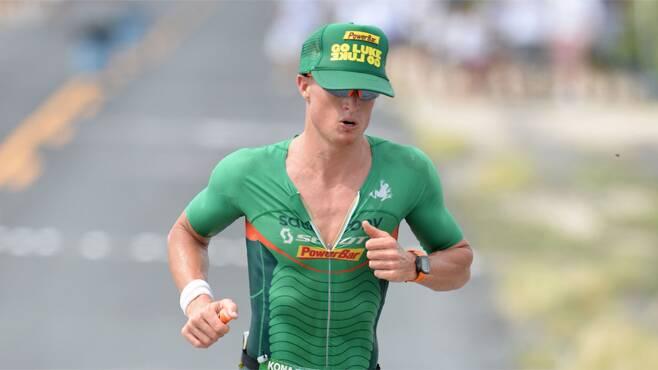
The Queen Ka’ahumanu Highway shimmers, a black ribbon unfurled across the ancient, unforgiving lava fields of Kona, Hawaii. On this scorched earth, under a relentless sun, a lone figure pushes forward. It is October 12, 2013, and Luke McKenzie is leading the Ironman World Championship. Clad in a pioneering sleeved green skinsuit and a simple trucker hat, he is a portrait of focused aggression, a man battling not only the brutal humidity and the world’s best endurance athletes but also the ghosts of a year defined by profound upheaval. He has just completed a furious 112-mile bike ride, leaving a trail of pre-race favorites minutes in his wake, and now he feels impossibly fresh as he takes the first purposeful strides of the marathon.
This moment is more than just the apex of a single race; it is the culmination of a 19-year journey, the defining scene in what McKenzie himself would come to see as his "Second Act". It is a breakthrough born from deconstruction, a performance forged in the crucible of personal and professional turmoil that saw him face a stalled career and the end of his marriage just months earlier. How did a man who had to completely start over find himself on the precipice of the sport's greatest prize? The answer lies not in a single training block or race strategy, but in a lifetime of immersion, a story of relentless resilience, deep-seated family influence, and an unshakeable love for the sport that has defined him since he was a boy.
Chapter 1: Forged on the Gold Coast#
The Seed of Ironman#
Long before Luke McKenzie was a professional triathlete, he was a student of its culture. His introduction to the sport was uniquely organic, rooted in family and community. In the late 1980s, starting at just seven years old, he and his entire family would volunteer at an aid station at mile 24 of the Ironman Australia marathon near their home in Forster. Year after year, he witnessed the raw emotion and physical extremity of the event, an experience that planted a deep-seated appreciation for Ironman. In a moment of foreshadowing, his parents once turned to find their young son running the final kilometer alongside the elite athletes he recognized from television, already placing himself among the giants of the sport. This active, familial immersion was not a passive observation; it established an emotional connection to the sport that would fuel a lifelong aspiration.
A Cauldron of Talent#
The McKenzie family’s move to Australia’s Gold Coast when Luke was 13 proved to be a pivotal moment, plunging him into the epicenter of Australian high-performance sport. This was an environment where greatness was normalized. He attended high school with future world champion surfers Mick Fanning and Joel Parkinson, and the local swim and bike routes were the training grounds for triathlon royalty. Legends like Chris McCormack and Miles Stewart were a common sight, their professional lives a tangible, daily inspiration for a teenager who would watch them ride past while he was being dropped off at school.
This proximity to excellence provided a powerful athletic foundation. McKenzie was already a promising swimmer, talented enough to train with an Olympic coach. However, in the hyper-specialized world of competitive swimming, he often felt like he was "getting his butt kicked". It was at the same pool that he noticed a triathlon club. Drawn to the multi-disciplinary challenge, he joined the squad and, in his very first race—a junior sprint lasting no more than 15 minutes—he took first place. The immediate victory was a profound psychological boost, validating his natural, all-around athleticism and setting him on a new trajectory.
The Junior Ranks and a European Hardening#
McKenzie's ascent was swift. He was selected to train at Australia's newly created national triathlon performance center, training alongside a golden generation of future champions including Mirinda Carfrae, Emma Snowsill, and Annabel Luxford. By 19, he had secured a third-place finish at the 2001 ITU World Junior Championships in Edmonton, Canada. Throughout this period, he absorbed invaluable lessons from mentors like Miles Stewart and by observing the intense Olympic preparation of Craig Walton, gaining a rare, firsthand education in professionalism.
A crucial developmental stage came during his gap year in 2001. Instead of backpacking, the 19-year-old McKenzie raced for a team on the French Iron Tour. It was a grueling trial by fire, racing two to three times a week against his idols—McCormack, Craig "Crowie" Alexander, and Simon Lessing—on a punishing travel schedule. He later reflected on this period as the time he "learned to harden up," an experience so demanding that it made all future challenges in the sport seem manageable.
By 2002, McKenzie stood at a crossroads. His success in the draft-legal, Olympic-distance ITU format was notable, but the path to the 2004 Athens Olympics was narrow, particularly within the stacked Australian team. It was at this point that Ironman World Champion Michellie Jones offered prescient advice. Recognizing that his powerful swim-bike combination was perfectly suited for long-course, non-drafting events, she suggested he and a still up-and-coming Craig Alexander move to Carlsbad, California, for the American summer to train under her and her husband, coach Pete Coulson. This was not a step down from an Olympic dream but a mature and strategic pivot toward the discipline that would ultimately define his career. Jones even provided him with his first time-trial bike, becoming his first bike sponsor and a formative influence on his professional discipline.
Chapter 2: The Ironman Journeyman#
Defining the "McKenzie Method"#
Transitioning to long-course racing, McKenzie quickly established a signature style that was both thrilling and brutally effective. His racing philosophy was built on his primary strengths: a front-pack swim and a devastatingly powerful bike leg. His strategy was to lay it all on the line in the first two disciplines, building a significant lead on the bike and then, as he put it, "running scared" to hold on during the marathon. This aggressive, opportunistic approach, modeled after former Kona champions like Normann Stadler and Faris Al-Sultan, made him one of the most feared cyclists in the sport and a constant threat to dictate the terms of any race he entered.
This high-risk, high-reward strategy proved immensely successful across the globe. Over the next decade, McKenzie became a prolific Ironman champion, amassing victories at major events in Brazil, Japan, Malaysia, China, and on home soil in Cairns. By the start of the 2013 season, he had already claimed six full-distance Ironman titles, cementing his status as a formidable and consistent winner on the international circuit.
The Kona Conundrum#
Despite his widespread success, the Ironman World Championship in Kailua-Kona, Hawaii, remained a frustrating puzzle. The very strategy that brought him victories elsewhere often proved to be a double-edged sword in the unique tactical and environmental crucible of the Big Island. The depth of the field and the punishing conditions meant that any miscalculation in effort on the bike could lead to a catastrophic failure on the run.
His results in Hawaii prior to 2013 told the story of a man struggling to find this delicate balance. He had strong performances, including a top-ten finish with 9th place in 2011, but these were often followed by disappointment. The 2012 race was a perfect illustration of this conundrum. He executed an aggressive bike strategy, averaging an impressive 290 watts for the first 44 miles to take the lead, but this early effort caught up with him on the return from Hawi, where his power dropped significantly. He faded to 8th off the bike and finished the day with a labored 3:20 marathon, ending up in a disappointing 24th place overall. The Kona course demanded a perfect calibration of aggression and patience, a formula that, for years, remained just out of his reach.
| Event | Year | Result | Significance |
|---|---|---|---|
| ITU World Championships | 2001 | 3rd | Established him as a world-class junior talent in short-course racing. |
| Ironman Brazil | 2010 | 1st | A major international Ironman title, showcasing his front-running prowess. |
| Ironman Cairns | 2013 | 1st | A key victory on home soil that built momentum for his Kona breakthrough. |
| Ironman World Championship | 2013 | 2nd | Career-defining performance, leading the race until mile 16 of the run. |
| Ironman Western Australia | 2015 | 1st | Set the fastest Ironman time on Australian soil (7:55:58) after his Kona DNF. |
| Ironman Wisconsin | 2017 | 1st | A course-record victory after stepping back to manage his health. |
Chapter 3: The Second Act: Deconstruction and Breakthrough#
The Year of Upheaval#
The period leading into the 2013 season was one of the most challenging of McKenzie's life. His career had hit a plateau, and his personal life was in turmoil with the end of his two-year marriage to fellow professional triathlete Amanda Balding. The upheaval was total; it involved moving continents, parting ways with his coach of 18 months, and, in his own words, starting completely over. This period of deconstruction, however painful, became a liberation. Stripped of external structures, he was forced into a state of radical self-reliance, fostering a new mental toughness and a willingness to trust his own instincts. This newfound autonomy was the missing ingredient for his Kona masterpiece.
The 2013 Kona Masterpiece#
Doing things "his way," McKenzie entered the 2013 Ironman World Championship with a renewed sense of purpose, buoyed by a dominant win at Ironman Cairns earlier in the year. From the outset, his race was a physical manifestation of this new, self-directed mindset.
On the bike, he made a bold, conscious decision to join the aggressive breakaway initiated by super-cyclists Andrew Starykowicz and Sebastian Kienle. Rather than playing it safe, he bet on himself. His power data from the day reveals a masterful performance. He averaged 277 watts for the first 56 miles to the turnaround at Hawi, then remarkably increased his output to 285 watts on the punishing return leg, a testament to a renewed focus on his bike fitness. The decisive move came around mile 75, when he surged at over 400 watts to take the lead from Starykowicz. He rode into the second transition with the second-fastest bike split of the day, a blistering 4:22:25, and a massive lead over the main contenders.
His performance was also a showcase of innovation. He was one of the first athletes to race Kona in a sleeved, wind-tunnel-tested skinsuit, a piece of equipment whose aerodynamic advantage he was proving on the world's biggest stage. The image of him leading the race in the distinctive suit and his signature trucker hat became iconic.
He started the marathon holding a commanding lead, his mind replaying the lessons of past failures. His internal monologue was one of patience: "Hold back, save something". For 16 miles, the plan worked. He ran with purpose, holding off the sport’s best. But Kona always demands its price. As he entered the searing heat of the Natural Energy Laboratory of Hawaii Authority (NELHA), known as the Energy Lab, his body began to wage war. His form broke down, his face grew taut, and he found himself deep inside "that dark place" where self-doubt and extreme physical strain conspire to break an athlete's will. It was here, at his most vulnerable, that eventual champion Frederik Van Lierde made the pass—a silent, "killer punch" that left McKenzie "lost at sea".
The turning point, the moment that salvaged his race and defined his day, came at the marathon turnaround. He crossed paths with his longtime mentor, Craig Alexander, who shouted the ten words that would reignite his fight: "Luke! You’re gonna have to suffer if you want this!". It was the perfectly timed activation of a decade-long bond, the voice he was conditioned to trust at the precise moment he needed it most. The veil lifted. Fueled by a Red Bull and Crowie's words, McKenzie dug deeper than ever before, embracing the suffering to hold onto his position. He crossed the finish line in second place with a final time of 8:15:19, throwing a haymaker in the air before collapsing, having left every ounce of himself on the course.
Chapter 4: Resilience in the Face of Adversity#
The Post-Podium Struggle#
Following up a career-defining performance is one of the most difficult challenges in sport. McKenzie's return to Kona in 2014 was a tough one; after the high of his runner-up finish, he placed 15th, a result he found deeply disappointing. He later reflected that he "never fired" on the day, a poor swim putting him on the back foot from the start and leaving him unable to execute his race plan.
The true test of his resilience, however, came in 2015. For the first time in his career, he recorded a DNF at the Ironman World Championship. The cause was a critical nutrition failure—a "rookie move" for such an experienced athlete—where his body began rejecting calories 100 km into the bike leg. The DNF was a "big wake up call" that forced him to fundamentally re-evaluate his fueling strategy, leading to extensive work with the Gatorade Sports Institute to analyze everything from his sweat rate to his race-day caloric intake.
Redemption in Record Time#
McKenzie’s career is defined by a recurring pattern: using devastating failure as a diagnostic tool to identify a weakness, rigorously addressing it, and returning stronger than before. The 2015 Kona DNF became the catalyst for one of his greatest achievements. Because he hadn't completed the grueling race in Hawaii, he was fresh enough to compete at Ironman Western Australia just weeks later. He arrived not just to win, but to make a statement. He attacked the course and smashed the eight-hour barrier, finishing in a blistering 7:55:58—the fastest Ironman time ever recorded on Australian soil. It was the ultimate example of turning a massive failure into an historic success.
The Invisible Battle#
Throughout these years of highs and lows, McKenzie was fighting an invisible battle. He was eventually diagnosed with Ankylosing Spondylitis, a chronic, inflammatory form of arthritis that causes pain and stiffness, primarily in the spine. The condition provided crucial context for periods of inconsistent performance and his oft-disappointing results, as his body would flare up unexpectedly.
By 2017, the combined pressures of his career, growing business commitments, and family life, all while managing a chronic illness, had left him "over committed, tired, fatigued". After a DNF at Challenge Wanaka, he made a difficult but mature decision: he would step back from pursuing Kona for the first time in over a decade to focus on his health. This choice represented a more holistic definition of athletic toughness—not just pushing through pain, but having the wisdom to address its root cause for the sake of long-term well-being.
True to form, this period of recovery led to another spectacular rebound. In September 2017, he won Ironman Wisconsin in race-record time, closing with a personal-best 2:49:00 marathon—a clear signal that his run, once a liability, had become a formidable weapon.
Chapter 5: The Republic of WYN#
From Athlete to Entrepreneur#
As his professional racing career began to wind down, McKenzie embarked on a new chapter that would become the embodiment of his legacy. In July 2017, he and his wife, Beth McKenzie—a fellow professional triathlete and Ironman champion—launched the high-performance apparel brand WYN Republic. The venture was a natural evolution, the tangible product of two decades of hands-on research and development conducted on the race courses of the world.
The idea for the brand was a "bucket-list" item for Luke, born from a career-long frustration with finding apparel that could maximize both aerodynamics and comfort without sacrificing style. His pioneering use of the sleeved suit at Kona in 2013 was a precursor to this mission; he was a walking case study for his future company’s philosophy before it even existed. It was Beth, described as a "business-minded creative," who provided the catalyst to turn this dream into a reality, blending her keen sense of style with Luke’s technical expertise.
A Family Affair#
The brand's philosophy is deeply intertwined with their family. The name "WYN" is a tribute to their first daughter, Wynne, and is also a homophone for "win," reflecting a broader goal of winning not just in sport, but in life. The "republic" signifies the global community of athletes they aim to build and support. This venture allowed them to integrate their shared passion for triathlon with their family life, creating a business that reflects their core values. After years of chasing an endless summer between California and Australia, the business, along with their growing family, which now includes a second daughter, Marlo, helped them put down permanent roots on the Sunshine Coast.
WYN Republic’s success is rooted in this authenticity. It is a brand built by athletes, for athletes. Their commitment extends beyond just creating innovative products like their wind-tunnel-tested aero suits. They have cultivated a global ambassador community, WYNR, which has grown to over 1,000 members, and have sponsored a roster of elite professional athletes, including Ashleigh Gentle and Braden Currie. Furthermore, their mission-based sister brand, MALO republic ("Making Active Little Ones"), operates a "Buy One | Give One" program, donating activewear to underserved youth and demonstrating a commitment to giving back to the community that has given them so much.
Conclusion: The Enduring Triathlete#
Luke McKenzie’s journey is a study in evolution. He transformed from the wide-eyed seven-year-old boy handing out water at Ironman Australia to a teenage prodigy hardened by the European racing circuit. He became a prolific Ironman champion, a Kona podium finisher, and a resilient competitor who repeatedly stared down significant adversity—from debilitating injuries to chronic illness—only to emerge stronger. And finally, he has become a respected entrepreneur, husband, and father, channeling a lifetime of experience into a brand that serves the global triathlon community.
His legacy is multifaceted. It is not measured solely by his nine Ironman titles or his silver medal on the sport's biggest stage. It is found in his mental fortitude, the relentless pattern of turning setbacks into record-breaking comebacks. It is seen in his role as an innovator, pushing the boundaries of equipment and aerodynamics. And it is embodied in his successful transition to a second act that keeps him deeply and authentically connected to the sport he loves.
Throughout this long road, one theme has remained constant: family. From his parents and sister instilling an early love for the sport, to his father providing mental coaching in the lead-up to Kona, to his wife Beth becoming his partner in life and business, and to his daughters inspiring the very name of their company, family has been the grounding force. While his days of leading the race on the Queen K may be over, Luke McKenzie’s enduring involvement as a mentor, brand owner, and community leader ensures that he remains, in every sense, a triathlete for life.