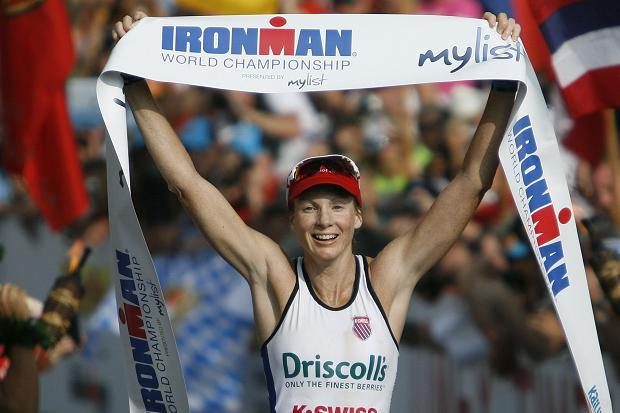
Leanda Cave
The Distance Within: The Unbreakable Will of Leanda Cave.
The Distance Within: The Unbreakable Will of Leanda Cave#
Introduction: The Queen K Highway, Mile 23#
The air on the Queen Ka’ahumanu Highway is a physical force. It rises in shimmering waves from the black lava fields, thick with humidity and the ghosts of past champions. For triathletes, this stretch of road, deep into the marathon of the Ironman World Championship, is where dreams are either realized or vaporized. On October 13, 2012, for Great Britain’s Leanda Cave, it was a crucible. She was at mile 23 of the 26.2-mile run, having already endured a 2.4-mile swim and a 112-mile bike ride under the punishing Hawaiian sun. Ahead of her, a solitary figure remained: Switzerland’s Caroline Steffen, who had led for the entirety of the run.
For hours, Cave had been locked in a relentless pursuit. This was not just a race for another title; it was a chase for a place in history. Five weeks prior, she had conquered the desert heat of Las Vegas to win the Ironman 70.3 World Championship. Now, in Kona, she was on the cusp of achieving the unthinkable: the “double,” a feat no woman in the history of the sport had ever accomplished. But the race had been a chaotic, high-drama affair. A four-minute penalty on the bike had threatened to derail her day, forcing her to claw back precious time against the world's best. Behind her, the sport’s most feared runner, Mirinda Carfrae, was hunting.
Yet, in that searing heat, with her body screaming, Cave moved with a grim, practiced resolve. She closed the gap to Steffen, drew alongside, and then, with a surge born of two decades of resilience, she pulled away. That decisive move on the Queen K was more than just a pass for the lead; it was a perfect encapsulation of her entire career. It was a journey defined not by serene, front-running dominance, but by a stubborn refusal to yield in the face of hardship—be it financial destitution, political disappointment, or career-threatening injury. The victory she would claim minutes later was not merely the culmination of a single day’s effort, but the validation of a life spent coming from behind.
Forging a Voice: From Lincolnshire to the Queensland Coast#
Leanda Cave’s story begins far from the volcanic fields of Hawaii, in the market town of Louth, Lincolnshire, England, where she was born on March 9, 1978 At age four, her family migrated to the sun-drenched coast of Queensland, Australia, a move that would shape her formative years and instill a complex, transatlantic identity. By her own account, she was a "shy, awkward teenager" who struggled to fit in and had few friends. She never fully identified with the Australian culture, feeling more aligned with the British household in which she was raised.
It was in this environment that sport became her refuge and her language. At 14, she found that athletics gave her a way to communicate and define herself, becoming her "currency in life and [her] voice". She excelled in elemental endurance pursuits: swimming, cross-country running, and the uniquely Australian discipline of surf lifesaving. But it was the nascent sport of triathlon that would provide the ultimate outlet. Her older sister, Melissa, competed first, and Leanda, intrigued, decided to give it a try. The result was immediate and profound. She won her very first race, competing on a mountain bike, and discovered a newfound power. "I often found myself beating the boys," she recalled, "which gave me a lot of confidence and respect among my peers".
For a young woman searching for her place, this was a powerful revelation. Triathlon was not just a hobby; it was a crucible for forging an identity. This foundation of self-worth, built through physical exertion and competitive success, would prove indispensable. When she eventually returned to the United Kingdom to pursue her professional ambitions, she chose to represent Wales, an allegiance made possible by her Welsh mother, adding another layer to her international persona. She was an English-born, Australian-raised athlete, competing for Wales on the global stage—a testament to a journey that had already crossed the world.
The Price of Ambition: A Dream Forged in Hardship#
The decision to chase a world title is one that demands absolute commitment, and for Cave, it came at the expense of a conventional life. Facing a crossroads between higher education and her athletic goals, she chose the latter, using university as an "excuse to leave home" just before her 17th birthday with a singular, audacious ambition: to become the best triathlete in the world. The reality of this pursuit was brutal and unglamorous. By 19, she was juggling three part-time jobs to fund her training, a relentless cycle of work, swim, bike, and run. Unable to afford a car, she "rode [her] bike wherever [she] needed to go – the pool, running track, work, grocery store".
Her attempt to join the elite triathlon scene in Sydney ended in failure; the cost of living was too high, forcing a demoralizing retreat back to her parents' home around her 21st birthday. It was a moment of profound doubt, but not defeat. She took a job working for the famed conservationist Steve Irwin at Australia Zoo, saving every dollar for her next gamble. That gamble was a one-way ticket to Europe, which she saw as the "Mecca of the triathlon scene at the time".
This period was the definition of living on the edge. She "maxed out [her] credit card, slept on floors, rented rooms amongst strangers, [and] took the train or Greyhound bus equivalent, to anywhere [she] could find a race". This was not merely a struggle for survival; it was a calculated, high-risk investment strategy with herself as the sole asset. Every dollar of prize money was immediately reinvested into her career—upgrading her equipment, securing slightly better accommodation, and eventually purchasing an old, but usable, car. She was consciously "betting on [herself] once again to be the best in the world". This entrepreneurial mindset was fueled by a quote she read that resonated deeply: "If you don’t take risks, one day you will work for someone who does". In 2001, the investment began to pay off. Racing for Great Britain, she finished second overall in a European series, earning her first "significant pay check" and a firm foothold in the professional ranks. The shy teenager from Queensland was now a hardened professional, forged in financial fire and ready to take on the world.
The Arrival: The Triumphs of 2002#
After years of sacrifice and relentless self-investment, 2002 was the year Leanda Cave’s stock soared. Having won the European Under-23 title in 2001, she exploded onto the senior international scene with a series of performances that validated every risk she had ever taken.
The first major result came at the Commonwealth Games in Manchester. Competing for Wales, she delivered one of the most thrilling races of the event. In front of a massive home crowd that included her entire family—gathered together in the UK for the first time in a decade—she produced a stunning late-race charge, coming from behind to overtake two athletes in the final 400 meters to seize the silver medal. "I wanted to make them all proud, and it was exciting when I did!" she said of the emotional experience. The performance was a showcase of the clutch, big-race temperament that would become her signature.
She backed up this success with another silver medal at the European Championships, confirming her status as one of the continent's elite short-course racers. But the crowning moment of her breakthrough year came in November in Cancún, Mexico. At just 23 years old, she toed the line for the ITU Short Course World Championships. In a dramatic race, she passed the world's top-ranked athlete, Barb Lindquist, who was suffering from heat exhaustion, to claim the gold medal and her first senior world title.
The victory was transformative. It brought not just glory but, finally, financial stability. She secured her first major sponsors and a monthly salary from the British Triathlon Federation. The prize money from her win went not toward a luxury car, which she deemed unnecessary, but toward purchasing her first property—a tangible return on years of high-stakes personal investment. The year 2002 was more than just a string of victories; it was the year Leanda Cave proved her audacious life strategy was sound and that she possessed the mental fortitude to deliver when the pressure was greatest.
The Unchosen Path: From Olympic Heartbreak to Ironman Aspirations#
For most elite short-course triathletes, the ultimate prize is Olympic gold. Cave was tipped to excel on the Olympic stage, but her path was cruelly diverted. As she would later state, "injury and politics would cost me a spot at the Olympics, not once, but twice". The build-up to the 2004 Athens Games was particularly contentious; she was overlooked by selectors in a controversial decision that left a "bitter taste" in her mouth for nearly a decade.
This profound professional disappointment could have ended her career. Instead, it became the catalyst for a radical reinvention. The closed door of the Olympics "paved the way for [her] to change direction from short distance triathlon racing to long". It was an act of career reclamation, channeling her frustration into a new and daunting discipline where success was determined on the race course, not in a selection meeting.
She methodically adapted to the longer distances, making her mark on the half-Ironman or 70.3 circuit. She earned a fourth-place finish at the 70.3 World Championships in 2006, followed by a bronze medal in 2007, proving her speed could be married with endurance. The ultimate validation of her new path came in 2007 at the ITU Long Distance World Championships in Lorient, France. There, she claimed her second world title, a full five years after her first. This victory was pivotal. It confirmed that her talent was not confined to the explosive speed of Olympic-distance racing. More importantly, it ignited a new belief within her. It was after this win that she later said she "knew [she] could win the Ironman World Championships in Kona". The Olympic dream may have died, but in its place, a new, even bolder ambition was born.
Anatomy of a Legend: The Historic 2012 "Double"#
By 2012, Leanda Cave was no longer just a former short-course champion dabbling in endurance; she was a formidable long-course powerhouse. A breakthrough third-place finish at the 2011 Ironman World Championship in Kona, coupled with her first Ironman-distance victory at Ironman Arizona later that year, had established her as a genuine title contender. The stage was set for a season that would etch her name into the annals of the sport.
The first part of her historic quest unfolded on September 9, 2012, in the desert outside Las Vegas. On a hot and hilly course, she conquered a world-class field to win the Ironman 70.3 World Championship, her third world title. The victory was a massive achievement in its own right, but it also created an unprecedented opportunity: with the Ironman World Championship in Kona just five weeks away, the "double" was now a possibility.
On October 13, the world of triathlon focused on the Island of Hawai`i. The women's race was a masterclass in tension and drama. Cave exited the 2.4-mile swim in 56:03, perfectly positioned in the lead group. On the bike, a powerful trio formed at the front, with Cave battling Caroline Steffen and American Mary Beth Ellis across the windswept 112-mile course. The race was thrown into chaos when both Steffen and then Cave were served four-minute penalties, shuffling the lead and testing their composure.
Steffen entered the final transition with a four-minute advantage, a seemingly decisive gap. But Cave began the 26.2-mile marathon with methodical determination. She ran shoulder-to-shoulder with Ellis before making a decisive break on the Queen K Highway. All the while, she had to contend with the knowledge that Mirinda Carfrae, one of the greatest runners the sport has ever known, was charging from behind. In a display of supreme racecraft, Cave held off Carfrae's advance, a move that seemed to fuel her confidence for the final push. Then came the defining moment. With just three miles to go, she reeled in the long-time leader Steffen and surged into the lead. She crossed the finish line on Ali’i Drive in a time of 9:15:54, a mere 1 minute and 4 seconds ahead of Steffen, securing the Ironman world crown and her place in history.
The achievement was more than a physical feat of endurance; it was a testament to extraordinary mental and emotional management. To peak for one world championship is the work of a year; to recover, refocus, and peak again for an even more grueling one five weeks later is legendary. Her ability to absorb the shock of a penalty, execute a tactically perfect marathon, and withstand the pressure from multiple challengers demonstrated a level of competitive mastery reserved for the true greats of the sport.
Table 1: 2012 Ironman World Championship - Women's Pro Top 5 Results#
| Rank | Athlete | Country | Swim | Bike | Run | Overall Time | |
|---|---|---|---|---|---|---|---|
| 1 | Leanda Cave | GBR | 0:56:03 | 5:12:06 | 3:03:13 | 9:15:54 | |
| 2 | Caroline Steffen | SUI | 0:57:37 | 5:06:49 | 3:08:09 | 9:16:58 | |
| 3 | Mirinda Carfrae | AUS | 1:00:06 | 5:12:18 | 3:05:04 | 9:21:41 | |
| 4 | Sonja Tajsich | DEU | 1:10:36 | 5:07:55 | 2:59:27 | 9:22:45 | |
| 5 | Mary Beth Ellis | USA | 0:56:06 | 5:08:06 | 3:10:30 | 9:22:57 | |
| Data sourced from multiple reports of the 2012 event. |
From the Summit to the Abyss: The Fight for More Than a Finish Line#
The aftermath of a career-defining victory is often a whirlwind of celebration and sponsorship obligations. For Leanda Cave, it was the beginning of a terrifying descent. "I went from being on the top of my sport to the absolute bottom within 6 months," she later admitted. The twin triumphs of 2012 gave way to the twin crises of 2013, a year that would test her resilience in ways a race course never could.
The first blow was physical. In early 2013, she began suffering from a severe hamstring pain that she initially tried to train through. The pain escalated into a full-blown tear, which then triggered a cascade of debilitating compensatory injuries affecting her left glute, quad, and knee. The reigning world champion was sidelined, unable to train or race effectively. She bravely made it to the start lines to defend her titles but was a shadow of her former self, finishing a disappointing 12th at both the 70.3 and full Ironman World Championships.
The second blow was far more frightening. During a visit home to Australia in February 2013, a routine check-up led to a shocking diagnosis: squamous cell carcinoma, a form of skin cancer. A lesion on her back, which she had dismissed as an itchy spot for the better part of a year, was found to be malignant. The news left her "really, really shocked. And so disappointed too, because I'd taken all these precautions".
The diagnosis forced a profound and painful reckoning. The sun, an unavoidable partner in her profession, was now a direct threat to her life. She was forced to question everything, realizing the cancer was "because of what I do for a living". This existential crisis transformed her relationship with the sport. Her training schedule was radically altered, with sessions starting at 4:30 a.m. to avoid the sun's peak rays. The fight was no longer for podiums, but for her health and her future. This period stripped away the veneer of the "unstoppable machine" and revealed the vulnerability of the human being beneath. Her battle shifted from one of athletic conquest to one of survival, and in doing so, she found a new purpose as a vocal advocate for sun safety, determined to prevent others from facing the same ordeal.
The Long Sunset: A Champion's Final Act#
Emerging from the abyss of 2013, Cave once again demonstrated her remarkable capacity for comebacks. Having finally healed from the torn hamstring that had plagued her for over a year, she returned to competition in 2014 with renewed determination. She quickly proved she was still a force, claiming victories at two ITU Pan-American Cup races in the spring. Her most emphatic statement came in August at Ironman Sweden, where she delivered a dominant performance, posting the fastest splits in all three disciplines to take the win.
Yet, the path was not without its familiar frustrations. In a painful echo of her past Olympic disappointments, she was controversially left off the Welsh team for the 2014 Commonwealth Games, despite her strong qualifying performances. It was a reminder that even for a four-time world champion, some battles are fought off the race course.
Over the next few years, she continued to compete at a high level, but the relentless grind of an 18-year professional career was beginning to take its toll. The decision to retire came not as a sudden event, but as a gradual realization. She officially stepped away from professional racing in early 2018 "I have been contemplating life after triathlon for some time now," she explained, "and my body showed me last year that it was not what it used to be". For a competitor of her caliber, simply participating was never enough. "There is not much joy unless I can dominate and be vying for a podium finish every race," she stated, revealing the core mindset of a champion. When her body could no longer consistently deliver the dominant performances she demanded of herself, the primary motivation for the immense sacrifice began to fade. Her retirement was not an admission of defeat, but a mature and self-aware decision to step away on her own terms, having given everything to the sport.
Conclusion: The Enduring Legacy of a Master of All Distances#
Leanda Cave’s place in the triathlon pantheon is unique and secure. She is one of a select few athletes to have mastered the sport across its entire spectrum, capturing four world titles over three distinct distances: ITU Short Course (2002), ITU Long Distance (2007), Ironman 70.3 (2012), and the Ironman World Championship (2012). This remarkable versatility, the ability to possess world-beating speed and transcendent endurance simultaneously, is the statistical bedrock of her legacy.
However, to measure her impact in titles alone is to miss the essence of her story. Her true legacy lies in the journey itself—a powerful narrative of risk, reinvention, and relentless resilience. She is the athlete who gambled everything on a one-way ticket to Europe; who channeled the heartbreak of Olympic politics into a new, more arduous discipline; who stared down a career-threatening injury and a life-threatening illness in the same year and returned to the top. Her career is a testament to the idea that greatness is not the absence of adversity, but the mastery of it.
Today, Cave remains deeply embedded in the sport that defined her. Having retired after 18 years as a professional, she has transitioned seamlessly into a new chapter as a coach, mentor, and business leader. Based in the US, she runs a coaching business with her husband, Maiko De Andara, sharing her vast well of knowledge with athletes of all abilities. She also serves as the COO at the Innovative Alternative Clinic in Tucson, Arizona, focusing on recovery modalities for athletes and wellness clients. Through community rides and continued brand partnerships, she remains a prominent and respected ambassador for triathlon, dedicated to giving back to the community that gave her a voice. Her career was a masterclass in conquering distance, but her lasting contribution may be in showing just how far one can travel from a shy, uncertain teenager to a history-making icon of strength and will.