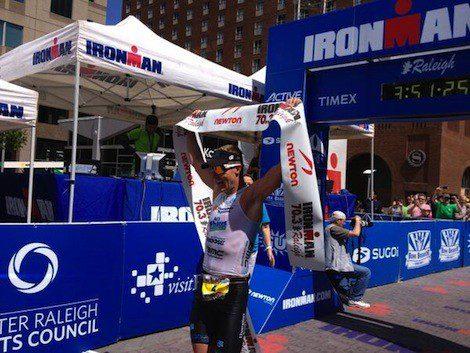
Greg Bennett
The Art of Endurance.
The Art of Endurance: The Definitive Story of Greg Bennett#
Prologue: The Agony of Fourth Place#
The air in Athens on August 26, 2004, was a thick, suffocating blanket of heat and history. On the sun-scorched asphalt, the world’s greatest triathletes were engaged in a brutal war of attrition, their bodies screaming for respite, their minds locked in a desperate calculus of pain and possibility. For Greg Bennett, a 32-year-old Australian at the peak of his powers, the final kilometer of the men’s Olympic triathlon was the culmination of a life’s work. The Acropolis stood as a silent, ancient witness to this modern agony. The roar of the crowd was a distant, muffled hum, secondary to the frantic rhythm of his own heart and the rasp of his own breath.
He was in the lead pack, a small, desperate group that had shed all pretenders over the preceding 1.5-kilometer swim, 40-kilometer bike ride, and punishing 9 kilometers of running. Now, only the podium places remained to be claimed. Every sinew, every muscle fiber was a conduit for searing pain. He pushed, drawing on the deep reserves of grit that had become his trademark. He could see the finish line, a shimmering mirage of glory and relief. He crossed it, collapsing in a heap of total physical and emotional expenditure. His final time was one hour, fifty-one minutes, and 41.58 seconds. It was a monumental effort, the performance of a lifetime on the world’s biggest stage. It was also, by the cruelest of margins, not quite enough.
The final results flashed. Hamish Carter of New Zealand, Gold. Bevan Docherty, also of New Zealand, Silver. Sven Riederer of Switzerland, Bronze. And then, in the place reserved for the first to be forgotten, Greg Bennett, Australia, Fourth. He was just eight seconds from the podium, a chasm of time that can be measured in a handful of heartbeats but feels, in that moment, like an eternity. It was the highest-ever finish for an Australian male in an Olympic triathlon, a statistic that offered little solace. It was, in a word, heartbreak.
This moment, in all its brutal finality, is the essential starting point for understanding Greg Bennett. Many athletic legacies are forged in the simple, brilliant fire of victory. Bennett’s, however, is a more complex and ultimately more profound story, one defined not by the absence of struggle, but by the response to it. The agony of fourth place was not a defeat but a crucible. It was in this narrow, agonizing gap between the podium and the rest of the world that the core of his philosophy was laid bare: success is not merely about winning, but about the unwavering will to endure. In a strange and poignant twist of fate, his wife, the elite American triathlete Laura Bennett, would suffer the exact same outcome four years later at the Beijing Olympics, also finishing fourth. This shared, bittersweet destiny would become a unique and defining element of their story, a testament to their parallel journeys at the absolute pinnacle of human performance, where the difference between a medal and a memory is measured in seconds. The Athens result posed the fundamental question that would echo through the rest of his career and beyond: What does it take to get that close, and how does one find the strength to go on, to push for just one more moment?
I. The Making of a Champion: From Sydney Harbour to the World Stage#
Greg Bennett was not born a champion; he was meticulously, painstakingly, and relentlessly built into one. His story begins not with a flash of prodigious, undeniable talent, but with the slow, steady accumulation of discipline. Born in Sydney on January 2, 1972, he was raised in an environment that was a perfect incubator for a future endurance athlete. Life with two competitive brothers was a constant series of contests, and the family ethos was unapologetically "sports made". Before triathlon entered his life, his days were filled with the quintessentially Australian pursuits of rugby, soccer, and sailing small dinghies on the iconic Sydney Harbour. This upbringing instilled in him a fundamental drive that became his internal compass: the desire "to become better, better than he was yesterday".
He discovered triathlon in 1986 at the age of 14, while a student at the prestigious Newington College. The sport itself was in its adolescence, a raw, untamed frontier that he would later describe as the "Wild West". The professional ecosystem of today—with its sophisticated coaching, sports science, and lucrative sponsorships—did not exist. The landscape was dominated by a handful of iron-willed pioneers like Mark Allen and Dave Scott, whose legendary duels in the lava fields of Hawaii were the stuff of myth and inspiration. Bennett became "totally consumed" by this new world, recounting how he and his friends would sneak into pubs to watch grainy broadcasts of the USTS Budlight series, mesmerized by the grit of athletes like Scott Molina and Scott Tinley. He was growing up
with the sport, his own development mirroring its evolution from a fringe pursuit to a global phenomenon.
Crucially, his ascent was anything but meteoric. Bennett is remarkably candid about the long, arduous process of his development, stating that it took him "almost a decade to reach the world stage". This was not a period of failure, but a vital apprenticeship. Lacking the effortless grace of a natural, he was forced to become a forensic student of the sport. His early physical attributes were not those of a prototypical triathlete. The legendary coach Brett Sutton, who worked with Bennett during this period, provided a stark assessment of the young athlete he first encountered in the early 1990s. He saw a "bull of a man" with the build of a "rugby player," an athlete who was not a natural swimmer and could only run "OK" for the first three kilometers of the 10k run. Where others might have seen insurmountable limitations, Sutton saw something more valuable: a burning "character and determination" and a deep-seated desire to "make myself something great".
This lack of innate talent became, paradoxically, the wellspring of his greatest strength. Unable to rely on raw ability, he had to master every other variable. He deconstructed the mechanics of high performance, immersing himself in the science of physiology, nutrition, sleep, and recovery long before such holistic approaches became mainstream. He had to learn
how to win, a process of intellectual and physical refinement that would later form the bedrock of his coaching philosophy. This extended apprenticeship, born of necessity, forged a deep, transferable knowledge of what it truly takes to succeed. It was a master's degree in grit, earned through thousands of hours of unglamorous, relentless work.
By the mid-1990s, the results of this decade-long effort began to manifest. At 25, he started winning on the international circuit. A victory at the 1997 ITU World Cup in Monaco was a significant breakthrough, followed by a triumphant win on home soil at the 1999 Sydney World Cup. He established his dominance in the Oceania region by capturing back-to-back continental titles in 1998 and 1999, and solidified his national standing with three consecutive Australian Long Course National Championships from 1998 to 2000 The rugby player had been remade. The apprentice was now a master craftsman, ready to take his place among the world's elite.
II. The Kingmaker and the Rise to Number One#
The story of Greg Bennett’s ascent to the pinnacle of triathlon is inextricably linked with that of another legend, the Canadian Simon Whitfield. Their relationship, a complex tapestry of mentorship, deep friendship, and fierce underlying rivalry, became one of the defining dynamics of the sport’s first Olympic era. It was a partnership that would first see Bennett play the role of kingmaker before using the experience to seize a crown of his own.
Their paths first crossed in Australia in 1993. Whitfield was a talented but raw teenager, attending boarding school in Sydney, far from his Canadian home. Bennett, several years older and already a respected figure on the circuit, saw a kindred spirit. "He didn't really know anybody," Bennett recalled, "...we invited him to come stay a bit... he was my younger brother and he's always felt like that to me". He took Whitfield under his wing, a mentorship that provided the younger athlete with stability and a model of professional dedication.
Years later, the dynamic evolved when Bennett moved to Victoria, British Columbia, to become Whitfield's primary training partner in the lead-up to the 2000 Sydney Olympics, the sport's debut on the Olympic stage. Under the guidance of coach Lance Watson, their contrasting styles created a perfect synergy. Watson described Whitfield as possessing natural "athleticism and that prowess," while Bennett was the "classic, put on your hardhat and go to work every day kind of athlete," bringing "grit and determination and consistency day in and day out". Bennett's relentless work ethic provided the structure and discipline that honed Whitfield's explosive talent.
A clear shift occurred just three weeks before the Sydney Games. During a grueling run workout, Whitfield, for the very first time, pulled away from his mentor. "My ego was hurt," Bennett admitted. "I was meant to be one of the top in the biz, and here he is beating me". But the sting of being beaten was quickly replaced by a profound realization: his friend was ready.
For Bennett, the 2000 Olympics were a source of deep personal anguish. Despite his status as one of Australia’s best, he was named only as a reserve for the team competing on home soil, a period he later described as his "dark days". He was forced to watch the race from the sidelines as Whitfield, his protégé, put on one of the most astonishing performances in triathlon history. After a poor swim and a multi-bike crash that left him well behind the leaders, Whitfield unleashed a blistering 10k run to storm through the field and claim a stunning, improbable gold medal. Bennett watched, his emotions a torrent of pride and personal disappointment. The climax came after the finish. "He ran over and put the medal around my neck and said, ‘This is yours,’" Bennett shared. "It was a really special moment that we had that for me still gives me goosebumps. It's almost like a career highlight in my own career".
This experience—the profound low of missing his own Olympic dream combined with the vicarious high of being instrumental in his friend’s—created a powerful psychological slingshot. It served as both a validation of his training methods and a stark, painful reminder of what he had missed. Instead of breaking him, this complex emotional cocktail became the fuel for his own period of global dominance. He channeled the frustration and the inspiration into an unwavering focus on his own performance.
The results were immediate and undeniable. In the years directly following the Sydney Games, Greg Bennett became the undisputed best in the world. He ascended to the World No. 1 ranking in 2002 and held it through 2003, winning the overall ITU World Cup Series championship in both of those years. His dominance was on full display with commanding World Cup victories in major triathlon hubs like Hamburg, Germany; Gamagori, Japan; and Ishigaki, Japan. Further demonstrating his incredible versatility and engine, he claimed a silver medal at the 2002 Duathlon World Championships. The kingmaker had transformed his own disappointment into an unassailable claim to the throne.
III. 2007: The Year the Bennetts Ruled the World#
If a single season can define a career, then 2007 was the year Greg Bennett’s entire philosophy of endurance, partnership, and relentless application of will coalesced into something truly historic. It was the year he and his wife, Laura, did not just compete in the world of triathlon; they conquered it. Together, they achieved a level of joint success and financial reward that was, at the time, unprecedented in the sport, cementing their status as triathlon’s ultimate power couple.
By 2007, Greg and Laura, married since 2004, had developed a unique and potent training dynamic: they were coaching each other. After what Greg described as a "bit rough" start to their collaborative coaching in 2005, their system began to "click" in 2006. This newfound synergy was perfectly timed with a seismic shift in the professional landscape of the sport, as new, high-stakes races with massive prize purses began to emerge. They prepared for the 2007 season with a grueling 16-week training block in Noosa, Australia, following the famed Lydiard Method, a high-volume approach that built a colossal aerobic base.
The first major dividend of this preparation was paid out in June, and it was Laura who cashed the check. The inaugural Hy-Vee ITU World Cup in Des Moines, Iowa, debuted with a jaw-dropping $1 million prize purse. For Laura, this race became her singular focus, her "world champs". She delivered a masterful performance, winning the race and its life-changing first prize of $200,000, plus a new Hummer H3.16 Greg, whose own race was about to start, sprinted to the finish line to greet her. He described the moment as an "outpouring of emotional relief" and a true "breakthrough moment for her" after years of toil at the highest level.
With Laura's triumph setting an incredible tone for the season, Greg turned his attention to his own audacious goal: conquering the five-race Life Time Fitness Grand Slam. The series, held in major American cities, offered a massive, winner-take-all bonus to any athlete who could win all five events—a feat widely considered "impossible" given the staggering depth of the men's field, which on any given weekend included legends like Simon Whitfield, Bevan Docherty, Craig Alexander, and Hunter Kemper.
The quest began in Minneapolis. Greg "laid down the exact race he visualized and won," ticking off the first victory. Next was New York City, a course perfectly suited to his strengths with its down-current swim, hilly bike, and hot, humid conditions. He claimed his second win, two for five.
The third race, in Chicago, presented a formidable challenge. Facing the formidable swim-biker Craig Walton, Greg knew he had to limit his losses on the first two legs. "I got off the bike and I was 2:30 down," he recalled, "so I just started sprinting. I remember running as fast as I could, like at the playground, and I was a maniac". He caught the fading Walton in the final mile, winning by a mere 12 seconds. The whispers of a clean sweep grew louder.
Race four in Los Angeles was a near-repeat of the Chicago drama. Walton again built a massive lead, coming off the bike 3 minutes and 30 seconds ahead. For a fleeting moment, Bennett thought the pressure was off, but his competitive instinct instantly took over. "NO—why don’t you go find out?" he thought to himself. He unleashed a ferocious, almost reckless, chase on the run, describing his descent down a steep hill near the Walt Disney Concert Hall as "just freefalling, opening the legs and letting the arms flail". He caught Walton with only 300 meters left to run, winning another nail-biting sprint finish.
The final hurdle was in Dallas, and it was complicated by both success and injury. In the interim, Greg had flown to Beijing to support Laura as she secured her spot on the 2008 U.S. Olympic team. "We partied so hard—it was so much joy," he said. But the combination of celebration and global travel took its toll, resulting in an Achilles injury that severely hampered his run training. The Dallas race was now an all-or-nothing proposition for the grand slam bonus. The pressure was immense. "It’s the most alive feeling you can ever have when you have to do something; it’s not a choice," he explained. On the morning of the race, a chiropractor and bodywork specialist worked on him from 2 a.m. to 5 a.m. just to get him to the start line. Despite the pain and the world-class field flown in to stop him, he "decided to own it and own it early". He won by 21 seconds, completing the impossible sweep and earning over $500,000 in winnings for the year. For his historic season, he was deservedly named
Triathlete of the Year.
Reflecting on that magical year, Greg said, "We got to have that—one time. You have these moments that are special, and this was a year of that moment... It was a year where it all came together and that was what was really special".
Table 1: Greg Bennett: Career Milestones
| Achievement | Details | Year(s) | ||
|---|---|---|---|---|
| World No. 1 Ranking | Ranked as the top male triathlete in the world by the ITU. | 2002, 2003 | ||
| ITU World Cup Series Champion | Won the overall season-long World Cup points series. | 2002, 2003 | ||
| ITU World Cup Wins | 6 individual victories on the premier international circuit. | 1997-2003 | ||
| Olympic Games | Represented Australia, finishing as the nation's top male. | 4th, Athens 2004 | ||
| Life Time Fitness Grand Slam | Won all 5 races in the series, securing the largest prize purse in history. | 2007 (Undefeated) | ||
| Ironman 5150 World Champion | Won the non-drafting Olympic distance world title. | 2011 | ||
| Career Statistics | Spanning an era of incredible depth and talent. | 27 Years Pro, 500+ Races, 100+ Wins | ||
| 1 |
IV. The Price of a Dream: Injury, Setbacks, and Unwavering Resolve#
For any athlete competing at the highest level for nearly three decades, the journey is inevitably paved with physical and professional obstacles. Greg Bennett’s career was no exception. His philosophy of endurance was not an abstract concept reserved for the final kilometer of a race; it was a practical tool he was forced to employ time and again to navigate the brutal realities of a professional sporting life. His story is one of remarkable resilience in the face of career-threatening injuries and significant professional transitions.
One of the most dramatic tests of this resolve came in August 2009. Just six days after winning his fourth consecutive Nautica New York Triathlon, Bennett was on a training ride near his home in Boulder, Colorado, when he was struck by a car. The impact, which he estimated occurred at around 40 km/h, sent him crashing to the pavement, his head hitting the curb. He described the immediate aftermath as a state of shock, with "blood everywhere". The damage was significant: a smashed and broken nose, a severely sore shoulder, swollen knees, and whiplash. It was a violent, frightening incident that underscored the daily risks inherent in his profession. Yet, his response was telling. While acknowledging he was "pretty fortunate" to have walked away, his mindset almost immediately shifted from survival to recovery. Within days, he was already contemplating a return to racing in Chicago just weeks later.
This crash was a stark reminder of the physical toll his body had absorbed over the years. It was not an isolated event. He spoke of having broken his arm "once or twice" and his nose "two or three times" over his career, including another high-speed crash during the 2003 Nice World Cup where he clipped a car that had entered the course. In 2012, as he prepared for his first-ever Ironman, a painful bout of bursitis in his knee completely derailed his training block. His celebrated longevity was not a product of avoiding injury, but of enduring and overcoming it repeatedly.
Beyond the physical challenges, Bennett also navigated a significant professional and personal evolution. In 2010, at the age of 38, he made the momentous decision to switch his racing allegiance from his native Australia to the United States. This was not a decision made lightly. His reasoning, however, revealed a fundamental shift in his priorities. The primary motivation was to provide complete and unwavering support for his wife Laura's campaign for the 2012 London Olympics. "I would like to be with her for her final Olympic journey," he stated publicly, "and I cannot do this as well as I would like unless I can be fully part of her team".
This move was far more than a symbolic gesture; it was a strategic masterstroke by the de facto CEO of the "Bennett family enterprise." By this point in their careers, Greg and Laura were not merely two elite athletes who happened to be married; they were a singular, high-performance unit. They coached each other, managed their careers in tandem, and understood that their individual successes were deeply intertwined. The change in nationality was a logistical and strategic alignment. It brought his official representation in line with his US-based sponsorships and medical team, and it streamlined the immense complexities of travel and training required to support Laura's Olympic qualification. This act redefined the concept of "team" in a fiercely individual sport. For Bennett, his most important team was no longer Team Australia, but "Team Bennett." He was willing to alter his national identity to optimize the performance of his core unit, a decision that perfectly foreshadowed their post-racing venture, Bennett Endurance, a business explicitly founded on their unique success
as a married couple. It was a clear signal that he was evolving from an individual competitor focused on personal glory to a leader focused on the collective success of his family.
V. The Long Run Home: A Veteran's Final Act#
The final chapter of a great athlete’s career is often the most telling. For some, it is a slow, reluctant fade from the spotlight. For Greg Bennett, it was a masterclass in longevity, adaptation, and graceful transition. He did not cling to his past glory in the cutthroat world of ITU racing; instead, he deliberately and successfully redefined his competitive landscape, proving his versatility and extending his career on his own terms.
Far from fading away in his late 30s, Bennett found a new gear. In 2011, just a few months shy of his 40th birthday, he delivered one of his most impressive performances, winning the star-studded Hy-Vee Triathlon in Des Moines. The race also served as the Ironman 5150 World Championship, the premier title for non-drafting, Olympic-distance racing, a format that played perfectly to his strengths as a powerful, honest athlete. "I feel like I'm almost 40... and to put my name on such a prestigious event before I'm done gives me goose bumps,” he said after the victory. This was not an athlete hanging on; this was an athlete still winning at the highest level.
He also found a new home in the burgeoning world of Ironman 70.3 racing. Between 2009 and 2013, he became a dominant force on the circuit, racking up victories at major events including Augusta, Vineman, Raleigh, and Buffalo Springs. This strategic shift allowed him to leverage his immense endurance base while moving away from the explosive, high-intensity demands of the ITU World Cup circuit.
His professional career, which began in the "Wild West" era of the late 1980s, spanned an incredible 27 years. His final race on the official ITU circuit was the Weihai Long Distance World Championships in China in September 2014, where he represented his adopted country, the USA. His results logs show his last professional start was likely at Ironman 70.3 Chattanooga in May 2015. When he officially announced his retirement, his long-time coach Brett Sutton penned a tribute that captured his impact. For more than two decades, Sutton wrote, there wasn't a competitor on any circuit "who when they saw GB with a bike and run shoes in transition didn't get a gnawing feeling in the pit of their stomach that 'today's going to be tough'".
This final act was a deliberate and well-executed exit strategy. Unlike many athletes who are forced into retirement by injury or a sudden decline, Bennett managed his transition with the same intentionality that defined his racing. By the time he hung up his racing flats, he had already laid the foundation for his next chapter. He was actively reflecting on the mental shift from being a world-class competitor to someone who trains for health and longevity, and was exploring how to channel his immense drive into new projects. His exit from professional racing was not an abrupt end, but a seamless evolution, a final demonstration of the long-term vision that had guided his entire career.
Epilogue: The Sage of Endurance#
In the years since his retirement from professional racing, Greg Bennett has completed the final, and perhaps most significant, stage of his evolution: from elite athlete to influential sage. He has successfully transitioned from a man who embodied the principles of high performance to one who teaches them, cementing a legacy that extends far beyond his more than 100 international victories and two decades at the top of his sport.
Together with Laura, he co-founded Bennett Endurance, a high-performance consulting and speaking service that is the natural culmination of their shared journey. Their mission is to distill a combined 50 years of elite racing experience into actionable strategies for athletes and non-athletes alike. The business is built on the core pillars that defined their careers: finding and living with passion, leveraging experience, building knowledge, and, above all, acting with intent. They are not just sharing war stories; they are providing a blueprint for optimizing human potential.
Bennett further extended his influence through "The Greg Bennett Show," a highly respected podcast where he conducted deep-dive interviews with the world's greatest athletes, coaches, and high-performers. The podcast became a masterclass in the very themes that shaped his own narrative: resilience, the psychology of winning, mental strategy, and longevity. Over five years, he produced 259 episodes, garnering more than two million downloads and creating an invaluable archive of wisdom on the nature of success. In early 2025, he announced a pause to the show to take on an exciting new role at Voloridge Health, a position focused on the future of health, longevity, and performance—a perfect alignment with his life's work.
His career resume is staggering: World No. 1, multiple World Series champion, Olympian, and Grand Slam winner. He has been deservedly named by his peers and by publications like Inside Triathlon Magazine as one of the 15 greatest triathletes of all time. Yet, his ultimate legacy is not contained in trophies or titles. It is found in his philosophy, a hard-won wisdom distilled into a simple, powerful mantra he often repeats: "Success comes to those who endure just one moment longer".
This brings the story full circle, back to the searing heat of Athens in 2004. The image of the athlete finishing fourth, agonizingly close to the podium, is no longer a portrait of heartbreak. Viewed through the lens of his entire life and career, it is transformed. It is the ultimate embodiment of his philosophy in action. It is a testament to the fact that true success is not always measured by the color of a medal, but by the courage to push through the pain, to show up again the next day, and to endure for that one extra moment. It is the art of endurance, perfected over a lifetime.