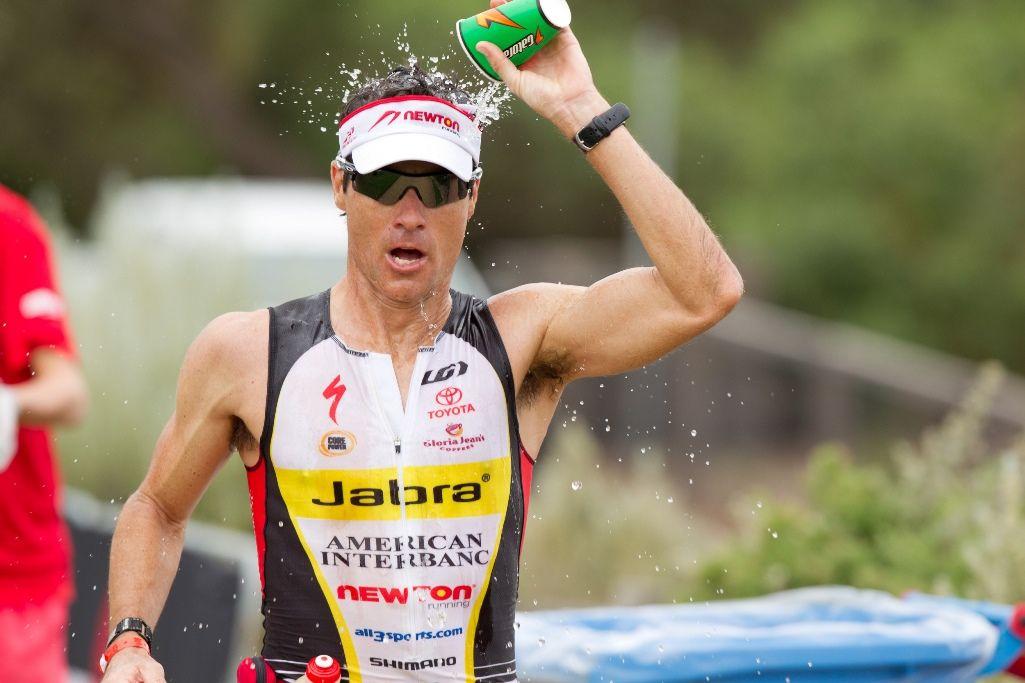
Craig Alexander
The King of Consistency.
The King of Consistency: The Enduring Reign of Craig 'Crowie' Alexander#
Introduction: The Agony and the Ecstasy on Ali'i Drive#
The final mile of the Ironman World Championship is a corridor of sound and suffering. For Craig Alexander, on that blisteringly hot Hawaiian day in October 2011, it was a crucible. The roar from the thousands lining Ali'i Drive in Kailua-Kona was a distant hum, drowned out by the internal screaming of his own body. At 38 years old, he was on the precipice of history, but every sinew in his legs threatened mutiny. After more than eight hours of relentless effort—a 2.4-mile ocean swim, a 112-mile bike ride through windswept lava fields, and now, over 24 miles of a marathon run under a punishing sun—his hamstrings and calves were seizing in near-debilitating cramps. He was forced to pull up, to stretch, to fight the agonizing clench of muscles pushed beyond their absolute limit.
On the line was more than just a victory. It was a third Ironman world title, a feat that would place him in the pantheon of the sport alongside legends like Dave Scott and Mark Allen. It was the chance to become the oldest man ever to win the coveted crown. And, tantalizingly close, was a ghost he had been chasing all day: the 15-year-old course record of 8 hours, 4 minutes, and 8 seconds, set by Luc Van Lierde in 1996—a mark that had seemed untouchable for more than a decade.
As he finally saw the finish-line clock, the reality of what was possible hit him. Pushing through excruciating pain, he found one last surge, sprinting the final few meters. He leaped across the finish line and collapsed onto his back, a champion writhing in a storm of agony and ecstasy. The clock read 8:03:56. He had done it. As his wife, Neri, and his children rushed to embrace him, the private, humble man from Sydney offered a sentiment that captured the profound nature of the moment. “I wish I could tell you how it feels,” he said, his voice thick with emotion. “It's unbelievable. I wish everyone in the world could feel what I felt in the last mile. It's the finish I've been dreaming of”. That finish was not just the culmination of a single race, but the ultimate expression of a career built on meticulous preparation, analytical precision, and a quiet, unshakeable resolve forged in the fire of a devastating defeat.
Section I: The Unlikely Champion: A Physiotherapist with a Footballer's Engine#
Long before he was a triathlon icon, Craig Alexander was a footballer. Born in Sydney, Australia, on June 22, 1973, his athletic identity was shaped on the soccer pitch, a sport he played with dedication for 15 years. It was here, in the lung-burning, 90-minute battles of his youth, that he unknowingly built the foundation of his future empire. His coaches noted his freakish endurance, remarking that he was still "full of running at 90 minutes". This powerful aerobic engine, developed through years of explosive, repetitive effort, would become his most formidable weapon.
Yet, his entry into the world of triathlon was almost an afterthought. At age 20, while studying at university, his athletic pursuits had taken a backseat to academics and a burgeoning social life. It was a gentle nudge from his mother to get back in shape that sent him for a run one morning, sparking a new journey. He had watched the Hawaiian Ironman on television, a spectacle of human endurance that planted a seed of curiosity. That seed burst into life in 1994 when fellow Australian Greg Welch became the first non-American to win the Ironman World Championship. For Alexander, watching Welch conquer Kona was a profound moment of inspiration that prompted him to take the sport seriously.
He did his first triathlon in December 1993, and by 1995, he was competing as a professional, securing a respectable eighth-place finish in his debut ITU World Cup race in Sydney. But what set Alexander apart from many of his contemporaries was the parallel track he was pursuing. While honing his body for elite competition, he was also sharpening his mind at Sydney University, studying anatomy and physiology before graduating in 1997 with a Bachelor of Science in Physiotherapy. This duality was the bedrock of his career. He wasn't just an athlete with a powerful engine; he was a student of the human machine. This academic background, as he would later reflect, fundamentally "shaped how I trained—emphasizing movement efficiency, strength, and endurance principles from the start". This unique fusion of a "blue-collar" athletic motor and a "white-coat" analytical mind created a formidable combination, allowing him to approach the sport with a level of meticulous intelligence that would become his trademark.
Section II: A Champion Forged in Exile: The American Detour#
Every great champion's career is marked by at least one pivotal moment, a crossroads where a setback forces a change in direction that ultimately leads to greater heights. For Craig Alexander, that moment arrived in 2002. He was on the initial squad for the Australian Commonwealth Games team, on the conventional path for a promising Aussie triathlete. But then, disaster struck. He contracted chickenpox, became severely ill, and missed the final selection races, costing him his spot on the team. It was a devastating blow, a moment he would later describe as a career "low point".
However, this disappointment became a liberation. Shut out of the national team and the draft-legal ITU circuit it prioritized, Alexander made a career-altering decision: he headed to North America to compete on the lucrative and demanding US non-drafting circuit. For the next decade, America became his training ground and his proving ground. The style of racing—a pure test of individual strength over the three disciplines without the pack dynamics of drafting—was perfectly suited to his powerful engine and methodical pacing. He began to dominate, collecting wins at major city races in Chicago, Los Angeles, and Boston, and claiming the iconic St. Croix Half-Ironman title four times.
The true validation of this new path came in 2005 at the Lifetime Fitness Triathlon in Minnesota. At the time, the race offered the highest prize purse in the history of the sport, a staggering $200,000 for first place. With their first child just eight weeks old, Alexander felt the pressure of providing for his young family. The victory was more than just a massive payday; it was, in his words, the moment that "gave us financial stability and validated not using my physiotherapy degree". It proved he belonged on the world stage and could forge a successful career on his own terms.
This period of American dominance culminated in 2006 at the inaugural Ironman 70.3 World Championship in Clearwater, Florida. After a long, unbeaten streak at the half-Ironman distance, Alexander arrived and conquered, becoming the first-ever 70.3 World Champion. The victory was a definitive statement. He was no longer just a successful racer on the US circuit; he was a world champion. More importantly, the win came with a coveted prize: a qualifying slot for the Ironman World Championship in Hawaii. The detour, born from the disappointment of illness, had led him directly to the sport's most sacred ground.
Section III: The Ascent of Mount Kona: The King is Crowned#
Craig Alexander's arrival in Kona in 2007 was not that of a wide-eyed rookie, but of a seasoned professional ready to contend. In his very first attempt on the Big Island, he immediately announced his presence, finishing second to his great Australian rival, Chris "Macca" McCormack. The performance was a clear signal: a new force had arrived in long-course triathlon. It took him only one year to learn the nuances of the course and claim the throne for himself.
The First Coronation (2008)#
The 2008 Ironman World Championship was a classic Kona day—hot, humid, and battered by unpredictable winds that were strong enough to blow athletes off their bikes. While others faltered in the challenging conditions, Alexander executed a race of tactical perfection. His strategy was a masterclass in patience and energy conservation. He remained comfortably within the top ten throughout the swim and the grueling 112-mile bike leg, never panicking, never burning unnecessary energy.
His plan was always to let the race come down to the marathon, his signature weapon. As the leaders exited the bike-to-run transition and headed out onto the sun-baked Queen K Highway, Alexander began his methodical surge. He ran with a fluid, efficient stride that belied the brutal conditions, picking off his competitors one by one. He took the lead and never looked back, crossing the finish line in a blistering 8:17:45 to claim his first Ironman World Championship. The victory was historic. Not only was he the new King of Kona, but he also became the first triathlete in history to hold both the Ironman 70.3 and the full Ironman world titles simultaneously, a testament to his versatility and dominance. "It's a big dream, a big goal," he said at the finish line. "I can't believe it".
The Great Chase (2009)#
If his 2008 victory was a display of tactical brilliance, his 2009 title defense was a showcase of pure, unyielding tenacity. The race dynamic was set by American uber-biker Chris Lieto, who stormed to a massive lead on the bike course. When Alexander dismounted his bike and headed out onto the run, he was faced with a daunting 12-minute deficit. For many, such a gap would have been insurmountable. For Alexander, it was simply the start of the real race.
What followed was one of the most compelling marathon chases in Kona history. Alexander, along with Germany's Andreas Raelert, began the methodical process of hunting down Lieto. Running stride-for-stride, they carved chunks out of Lieto's lead with every passing mile. The pressure was immense, but Alexander remained unflappable, his face a mask of concentration. The decisive move came late in the race, at mile 21 of the marathon, where he finally overtook a fading Lieto to seize the lead. He powered home to finish in 8:20:21, securing his second consecutive world title. In doing so, he joined the exclusive club of men who had successfully defended the Kona crown, becoming just the fourth athlete in history to achieve the feat. The victory proved that whether he was running from the front or chasing from behind, on the Kona marathon course, Craig Alexander was the undisputed king.
Table 1: The Apex Predator: Craig Alexander's World Championship Reign#
| Year | Championship | Location | Winning Time |
|---|---|---|---|
| 2006 | Ironman 70.3 World Championship | Clearwater, USA | 3:45:37 |
| 2008 | Ironman World Championship | Kailua-Kona, USA | 8:17:45 |
| 2009 | Ironman World Championship | Kailua-Kona, USA | 8:20:21 |
| 2011 | Ironman 70.3 World Championship | Henderson, USA | 3:54:48 |
| 2011 | Ironman World Championship | Kailua-Kona, USA | 8:03:56 |
Section IV: The Rivalry and The Reinvention: A Defeat that Forged a Legend#
At the highest level of sport, success can breed complacency. For Craig Alexander, his winning formula in Kona—stay in contention on the bike, unleash a superior marathon—had proven nearly unbeatable. But in 2010, that formula was brilliantly deconstructed by his greatest rival, Chris McCormack, in a race that would ultimately redefine Alexander's career.
The rivalry between "Crowie" and "Macca" was one of the defining narratives of their era. It was a classic clash of personalities: McCormack, the brash, outspoken showman, and Alexander, the quiet, humble professional who preferred to let his results do the talking. Leading into the 2010 World Championship, McCormack, a brilliant tactician, identified the vulnerability in Alexander's strategy. He knew that if the strongest cyclists in the field worked together, they could create a large enough gap on the bike to neutralize even Alexander's formidable run.
McCormack publicly campaigned for an alliance, urging his fellow European power-bikers to join him in pushing the pace to "burn the matches" of the elite runners, with Alexander as the primary target. The plan worked to perfection. A powerful group drove the pace on the bike, leaving Alexander isolated and forced to chase alone for much of the latter half of the ride. By the time he reached the run course, the deficit was too great. Despite running a suicidal early pace and ultimately finishing with a blistering 2:41 marathon split, he could only manage fourth place. The defeat was a public exposure of what some saw as a "one-dimensional" race plan.
For Alexander, the loss was a painful but necessary awakening. It shattered the illusion of his invincible formula and forced a period of intense self-reflection. He had become complacent, resistant to change because his method had brought him so much success. The defeat in 2010 became the catalyst for his evolution. "As much as it hurt for me to lose in 2010, it was probably good for me and was the best thing that happened to me," he later admitted. "It makes you re-evaluate things... It was time for me to show a different string in my bow". He realized that to win again, he couldn't just be the best runner; he had to become one of the best cyclists as well. The sting of that fourth-place finish set the stage for his greatest performance.
Section V: The Crow Flies: The Unprecedented Double of 2011#
The 2011 season was Craig Alexander's magnum opus, a year in which he silenced all doubters and reached the zenith of the sport. His response to the 2010 setback was not just to train harder, but to train smarter, completely reinventing himself as an athlete.
The first sign of his new form came in September at the Ironman 70.3 World Championship in Las Vegas. On a challenging course, he claimed his second 70.3 world title, demonstrating a renewed strength and confidence. But this was merely the prelude. The true test would come one month later, back on the lava fields of Kona, the site of his most profound lesson. He arrived on the Big Island a different athlete, armed with a new strategy and a burning motivation to prove his completeness.
The Masterpiece Race#
His performance at the 2011 Ironman World Championship was a masterclass in execution, the culmination of a year spent re-evaluating every facet of his racing.
- The Swim (51:56): He exited the waters of Kailua Bay in the main chase pack, exactly where he needed to be. It was a strong, controlled effort that conserved energy and kept the leaders within sight.
- The Bike (4:24:05): This was the manifestation of his reinvention. For the first time in Kona, he wore a full aero helmet, a nod to the "one percenters" he had previously overlooked. Instead of riding conservatively, he rode with aggressive intent, staying with the lead group and demonstrating a newfound power. The result was a bike split of 4:24:05, a staggering 13 minutes faster than his previous best time on the course. He entered the second transition in fourth place, just over five minutes behind the leader, Chris Lieto, but well within striking distance. He had successfully neutralized the weapon that had been used against him the year before.
- The Run (2:44:03): With his improved bike leg, Alexander was able to unleash his running prowess from a position of strength rather than desperation. He quickly reeled in Lieto and took the lead, but the race was far from over. Germany's Andreas Raelert mounted a fierce challenge, pushing a "suicide pace" that forced Alexander to dig deeper than ever before. He held off Raelert and then, in the final miles, began his battle with his own body. Fighting through the crippling cramps, he crossed the line in 8:03:56, shattering the 15-year-old course record.
The victory was a symphony of achievements. He became the first person in history to win both the 70.3 and full Ironman World Championships in the same year, a feat known as "the double". At 38, he became the oldest man to win the title. He had not posted the fastest swim, bike, or run split of the day, but his performance was the most complete. It was a victory of intelligence, resilience, and perfect execution, proving his own philosophy: "the person who crosses the finish line first isn't usually the best runner—it's the best triathlete".
Section VI: The Man Behind the Medals: Family as Fuel#
Behind the five world titles, the course records, and the steely race-day focus, there is another, more fundamental identity that defines Craig Alexander: that of a husband and father. In a sport that demands an almost monastic level of selfish dedication, Alexander crafted a powerful counter-narrative, proving that deep family integration could be a source of unparalleled strength and motivation.
The cornerstone of his life and career is his wife, Nerida, or "Neri," whom he married in 1999 In the lean early years of his professional career, Neri was his first and most important sponsor, working night shifts and double shifts as an emergency nurse to fund his travel to the next race. Her greatest sacrifice came when she resigned from her career so the family could travel together for a decade, a decision Alexander acknowledges was logistically difficult and financially expensive but was a "great investment" in his family and his performance. "Could I have been an athlete without Neri?" he once mused. "Yes. Could I be where I am today without her? Absolutely not. She is my inspiration".
The arrival of their three children—Lucy, Austin, and Lani—only deepened this conviction. While many athletes isolate themselves to focus on training and recovery, Alexander consciously rejected this "Rocky Balboa-style" approach. He was one of the few top professionals who consistently had his family on the road with him. He believed that being away from them would cause him to be homesick and emotionally unsettled, ultimately hurting his performance. Fellow professionals recognized this unique dynamic, identifying him first and foremost as a "family man" who was a "total softy when it comes to his family".
This commitment was rooted in his own childhood; his parents separated when he was very young, and he was determined not to let his children feel that his career was more important than they were. He would finish a grueling six-hour training ride and, instead of immediately focusing on recovery, would spend time playing with his kids, a choice he admits may have been "detrimental to my performances, but it certainly enhanced my performance as a father". Yet, this balance was not a compromise; it was his fuel. Becoming a father, he stated, "changed my life in an amazing way and certainly added fuel to my fire. I was incredibly driven by my family and what they meant to me, but also what they sacrificed so I could do what I loved to do. I wanted to honour their sacrifice". For Craig Alexander, the finish line was not just a personal goal; it was a promise kept to the people who made the journey possible.
Conclusion: The Enduring Legacy of 'Crowie'#
Craig Alexander's place in the triathlon pantheon is secure. The numbers alone tell a story of historic greatness: three Ironman World Championships, two Ironman 70.3 World Championships, and the unprecedented "double" of 2011. His record-breaking performance in Kona that year, achieved at an age when most athletes are past their prime, stands as one of the most remarkable achievements in the sport's history. His contributions have been formally recognized by his home country; he was named Australian Sportsperson of the Year in 2009 and was awarded the prestigious Order of Australia Medal (OAM) in 2015.
Yet, to measure his legacy solely in titles and times would be to miss the essence of his impact. Even after stepping away from full-distance Ironman racing in 2014, he remained a formidable competitor, continuing to win major 70.3 races well into his 40s, a testament to his incredible longevity and enduring love for the sport. However, his most significant contribution may be his evolution from champion athlete to revered coach and mentor.
In 2014, he launched his coaching brand, Sansego, a venture that represents the natural culmination of his life's work. Sansego is not merely a business; it is the codification of the very philosophy that propelled him to greatness. Its core tenets—"planning, consistency & patience"—are the same principles he meticulously applied throughout his career, from his early days as a physiotherapy student to his reinvention as a complete triathlete. Through coaching, camps, and clinics, he now disseminates the knowledge that was once his competitive advantage, mentoring a new generation of athletes. His appointment as an official IRONMAN U Master Coach further cements his status as one of the sport's most trusted and respected figures.
Ultimately, Craig Alexander's legacy is one of process over outcome. While his victories are legendary, his true impact lies in the intelligent, balanced, and relentlessly consistent method he perfected. He demonstrated that success is not just about having the biggest engine, but about understanding how to maintain it, tune it, and deploy it with maximum efficiency. He provided a new model for what a champion could be: a fierce competitor and a devoted family man, a brilliant tactician and a humble student of the sport. His records may one day be broken, but his legacy as the complete triathlete—the King of Consistency—will endure.